


Imagine sitting on a video call with a software engineering candidate. They answer complex system architecture questions without hesitation. They solve difficult coding challenges in minutes. They speak clearly, communicate well, and impress your senior engineering team.
Then, you decide to make an offer.
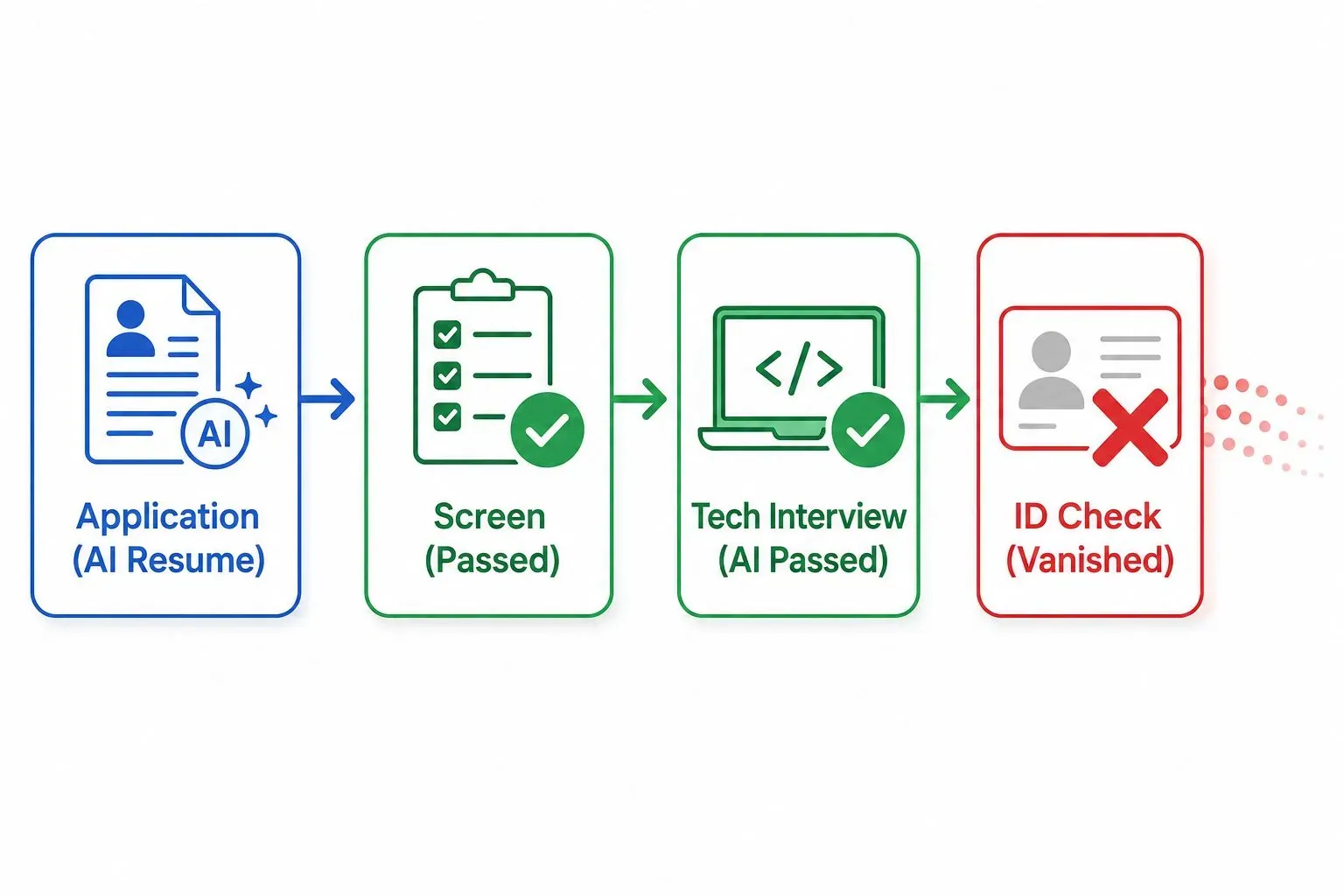
When your HR team reaches out to verify identity documents and set up payroll, the person disappears. No phone response. No valid tax ID. No physical footprint.
The person you interviewed never existed.
This is no longer a theoretical security concern. Remote hiring teams are now encountering synthetic identities and AI-assisted applicants capable of clearing technical interview loops on their own.
What Happened at Arena?
In August 2026, Anastasios Angelopoulos, co-founder and CEO of AI evaluation platform Arena, shared a startling discovery about their recruitment pipeline. Company engineers had interviewed multiple technical candidates who cleared their rigorous technical screening rounds.
When Arena attempted to proceed to final hiring stages, the candidates turned out to be completely fake. As reported by Business Insider, Angelopoulos stated plainly: "This person wasn't real. It was AI."
He explained that when the team attempted to finalize the hires, the applicants turned out to be "vaporware"—digital illusions that vanished the moment formal employment verification began.
Angelopoulos did not know who was behind the bogus applications. He raised the possibility of corporate espionage, cyberattacks, or attempts to access company data and code.
How AI Candidates Pass Live Job Interviews
Passing a modern technical interview requires answering questions quickly, writing clean code, and explaining architectural trade-offs. AI tools can now handle each of these steps in real time during a live video call.
Here is how these setups operate:
- Real-Time Teleprompters and Voice Feeds: Applicants connect an audio loop from the video meeting directly into a large language model. The model transcribes the interviewer's question, processes the intent, and generates a structured answer on a hidden screen within two seconds. In more advanced setups, voice-cloning software speaks the generated answer directly into the microphone channel.
- Screen-Reading Code Assistants: Standard coding interviews often use shared web editors. Candidates run optical character recognition (OCR) or screen-capture tools that send coding prompts directly to reasoning models. The model outputs optimized code with time-complexity analysis, which the candidate types or pastes into the shared environment.
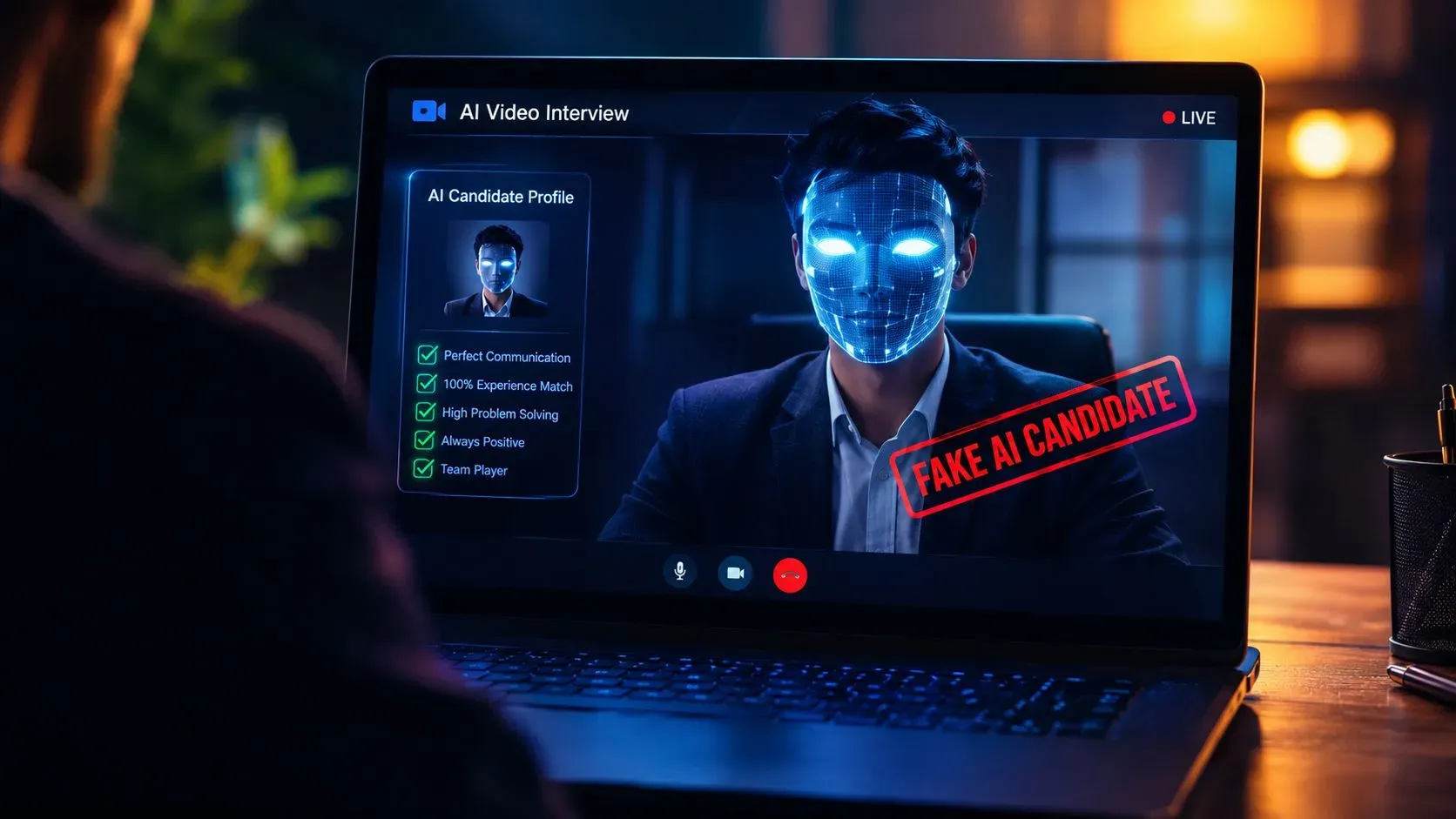
- Synthetic Video Avatars: Fraudulent operations use digital face overlays and camera filters to create realistic faces for video interviews. These filters track facial landmarks in real time to match mouth movements with incoming audio, helping them bypass basic webcam inspections.
- Algorithmic Resume Optimization: Before the interview even happens, automated resume generators tailor work experience, skills, and project summaries to match the employer's exact job description. This ensures the fake profile ranks at the top of automated applicant tracking systems (ATS).
The Scale of Interview Fraud
Interview manipulation is expanding quickly across remote tech roles. Data from identity and assessment providers reveals how widespread the issue has become.
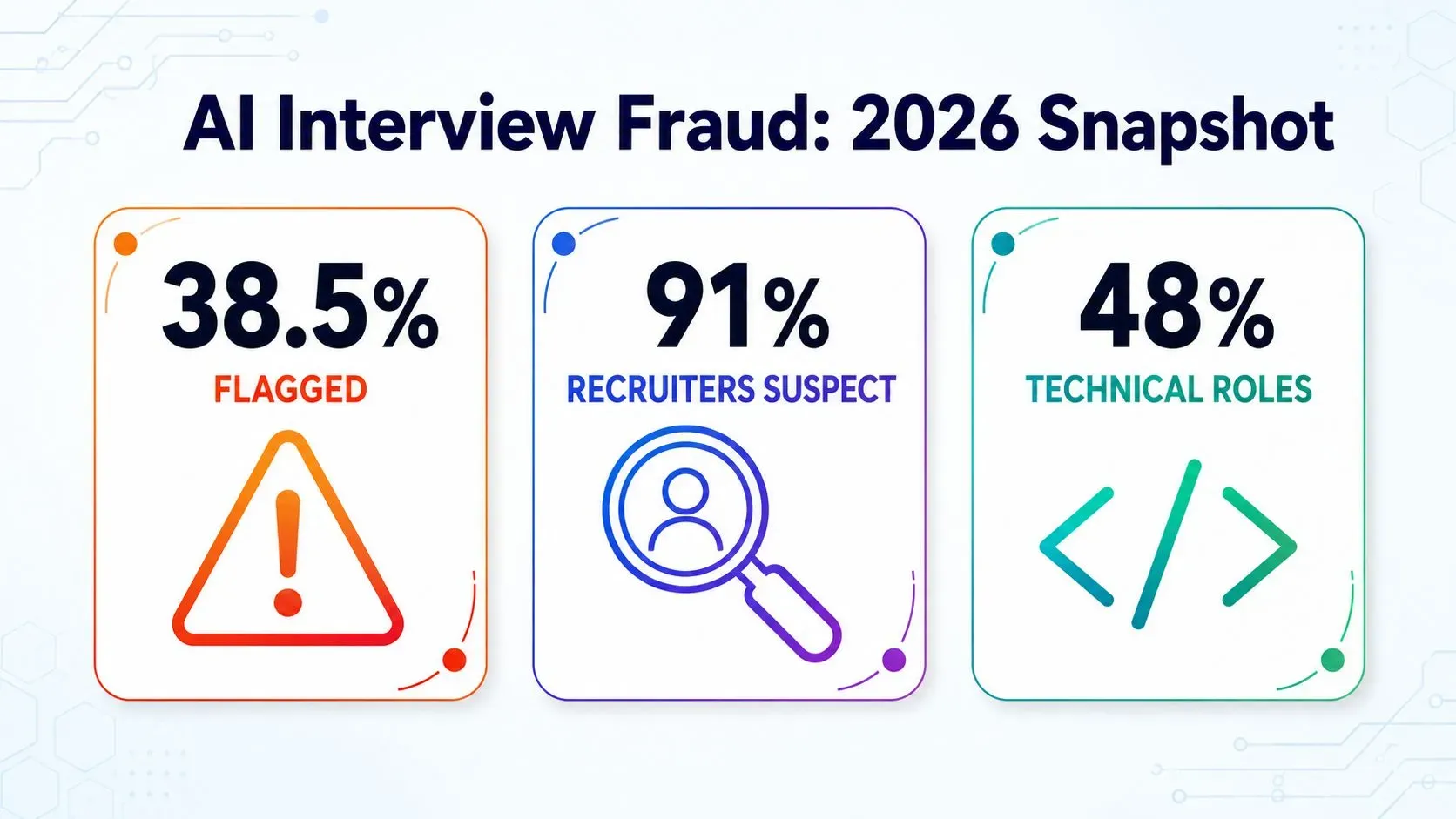
- High Cheating Rates in Tech: An analysis of 19,368 AI-powered interviews published by Forbes showed that 38.5% of candidates were flagged for AI-assisted cheating behavior, with flags reaching 48% in purely technical positions.
- Recruiter Suspicion: A hiring manager survey highlighted by Staffing Industry Analysts found that 91% of 4,000 respondents encountered or suspected applicants of using AI-generated interview answers.
- Federal Warnings: The FBI's Internet Crime reports have warned of synthetic identities, voice spoofing, and deepfake video being used to secure high-paying remote IT roles.
Traditional Candidates vs. Synthetic Candidates
| Factor | Real Candidate | Synthetic / AI Candidate |
|---|---|---|
| Response Pattern | Natural pauses, self-correction, personal anecdotes | Immediate, textbook answers with minimal pauses |
| Coding Style | Incremental typing, debugging, syntax checks | Writes flawless blocks of code on the first attempt |
| Work History Verification | Verifiable references and background history | Inconsistent LinkedIn records, unverified companies |
| Identity Verification | Matches government-issued photo ID | Refuses live ID checks, avoids in-person onboarding |
Why Are People Deploying Fake Candidates?
Why would someone spend time building an AI candidate only to disappear at the hiring stage? Investigations into remote hiring fraud point to three main drivers:
- Proxy Job Placement Networks: Organized groups use skilled interview proxies or AI models to win lucrative remote engineering contracts. Once hired, they hand the actual job duties to low-skilled workers overseas while pocketing the salary difference.
- Access to Corporate Systems: Certain bad actors seek employment solely to gain security credentials, internal repository access, or sensitive company data before their lack of real ability is noticed.
- Capability Testing: Some developers and bad actors run synthetic candidates through real corporate interview loops as benchmarks to test how well their autonomous agents perform against human evaluators.
How Companies Are Protecting Their Hiring Pipelines
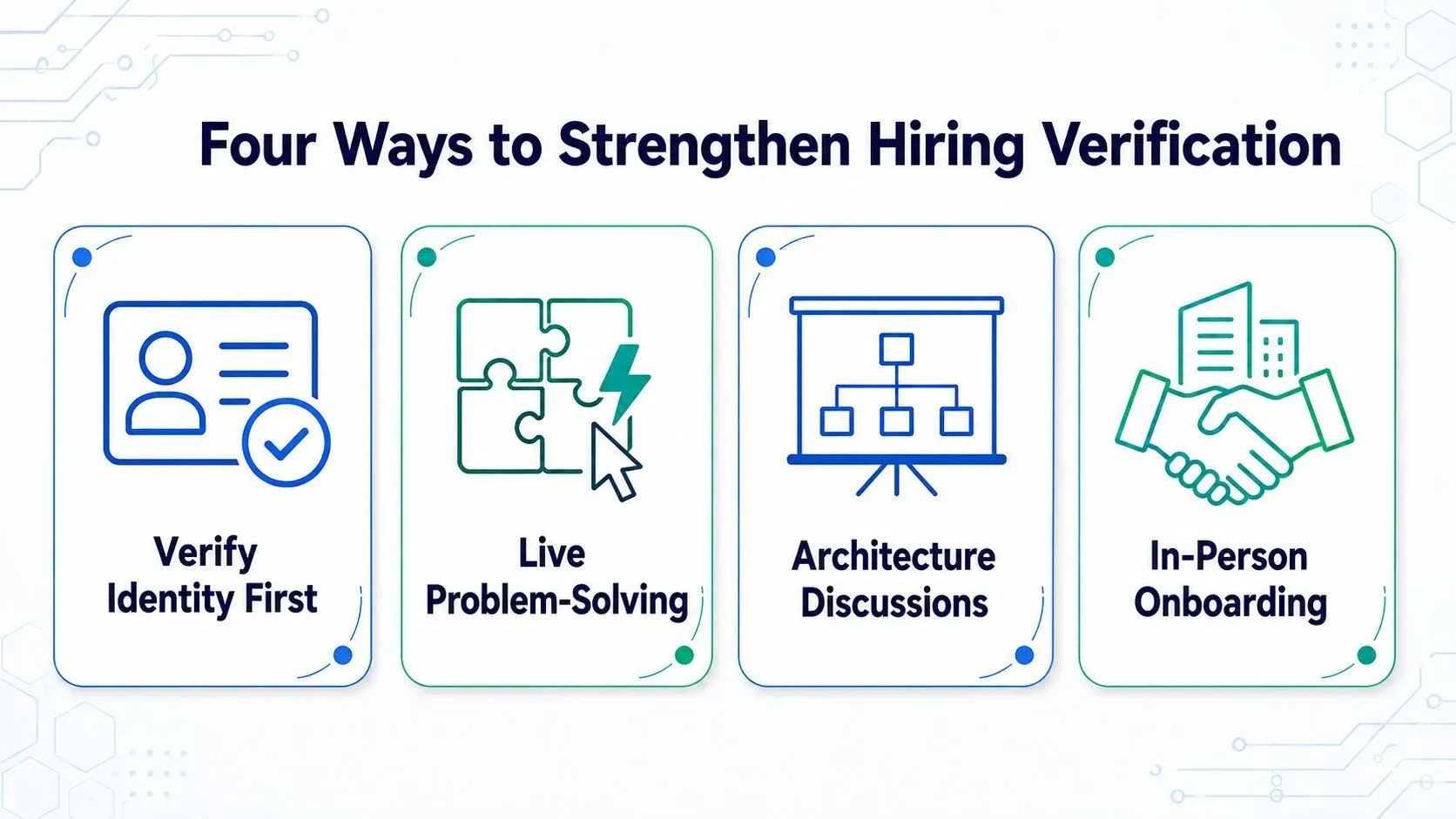
Standard technical questions found on public coding platforms are no longer enough to evaluate engineering talent. To protect their teams, companies are updating their screening workflows:
- Mandatory Identity Verification Before Technical Rounds: Instead of running background checks after making an offer, teams now verify government IDs and live biometric likeness before the first technical call begins.
- Live Problem-Solving on Ambiguous Scenarios: Standard algorithm questions can be solved by AI in seconds. Interviewers are shifting toward open-ended debugging sessions on custom, messy codebases where the candidate must explain trade-offs and business context rather than produce a single formula.
- Interactive Whiteboard & Architecture Discussions: Asking candidates to defend specific engineering decisions under shifting constraints exposes AI teleprompter users. LLMs often struggle when an interviewer interrupts mid-sentence to alter system requirements on the fly.
- In-Person First-Week Onboarding: To counter ghost workers and proxy hiring schemes, more distributed companies now require new hires to complete their initial onboarding week at a local office or regional hub before switching to remote work.
What to Do If You Suspect a Fake Candidate
If a recruiter suspects they are speaking with a fake candidate during a live session, they should take the following steps:
- Maintain a neutral demeanor to avoid alerting the bad actor.
- Ask the candidate to perform a physical action, such as turning their head completely to the side or passing a hand in front of their face (these movements often break the deepfake tracking software).
- Prompt the candidate with specific, highly contextual questions about their past experience that a proxy would not quickly know.
- If the suspicion persists, politely conclude the interview and immediately escalate the issue to the IT security team. Preserve all communication logs, resume files, and interview recordings. Document the specific anomalies or red flags that led to the suspicion.



Leave a Comment
Your comment is completely private and secure. We never publish comments publicly on our website. Your message will be sent directly to our team.