


You do not need a four-year college degree to earn a six-figure salary in artificial intelligence. Tech employers and modern agencies care primarily about what you can build. They look for proven skills rather than where you went to school.
If you can connect software tools through APIs, write accurate prompt pipelines, or build reliable AI workflows, companies will pay you $100,000 to $160,000 per year.
This guide outlines six high-paying AI roles open to non-degree candidates. You will learn the exact skills you need, real salary ranges, and how to prove your worth with a practical portfolio.
Direct Answer: Can You Earn $100K in AI Without a Degree?
Yes, you can earn over $100,000 in AI without a college degree. High-paying non-degree roles focus on workflow automation, prompt architecture, tool integration, and quality testing rather than advanced mathematical research.
Companies hire candidates who demonstrate working projects, clear communication, and practical problem-solving. A strong public portfolio on GitHub, live software demos, and documented case studies carry more weight than a traditional diploma.
Top 6 AI Jobs That Pay $100,000+ Without a Degree
The AI job market has expanded beyond research labs. Companies need hands-on specialists who can put models to work in everyday business operations.
Here are six high-paying roles where proven skills beat a formal degree.
1. AI Automation Specialist
Typical Salary Range: $100,000 – $145,000 per year
Freelance Hourly Rate: $65 – $150 / hour
Primary Tools: Make.com, Zapier, n8n, Python, Webhooks, OpenAI API, Anthropic API
An AI Automation Specialist builds automated workflows that connect business software with language models. Instead of staff manually sorting emails, answering basic tickets, or entering invoice data, these specialists create automated systems that run tasks on schedule.
You do not need an advanced coding background to start. Most specialists use visual builders like Make or n8n, combined with basic Python scripts to clean data and parse JSON responses.
Key Daily Tasks
- Connect internal databases and CRM tools with AI model endpoints.
- Build automated document processing and data extraction pipelines.
- Monitor API response times, manage error rates, and maintain workflow uptime.
Practical Project Idea
Build a working customer support pipeline on Make or n8n. The system should read incoming support tickets, classify their urgency with an LLM, draft a response, and update an Airtable database. Record a two-minute walkthrough video showing the live workflow.

2. AI Prompt Engineer and Context Specialist
Typical Salary Range: $100,000 – $160,000 per year
Freelance Hourly Rate: $75 – $175 / hour
Primary Tools: Structured prompt templates, LangSmith, Anthropic Console, OpenAI Playground, Python
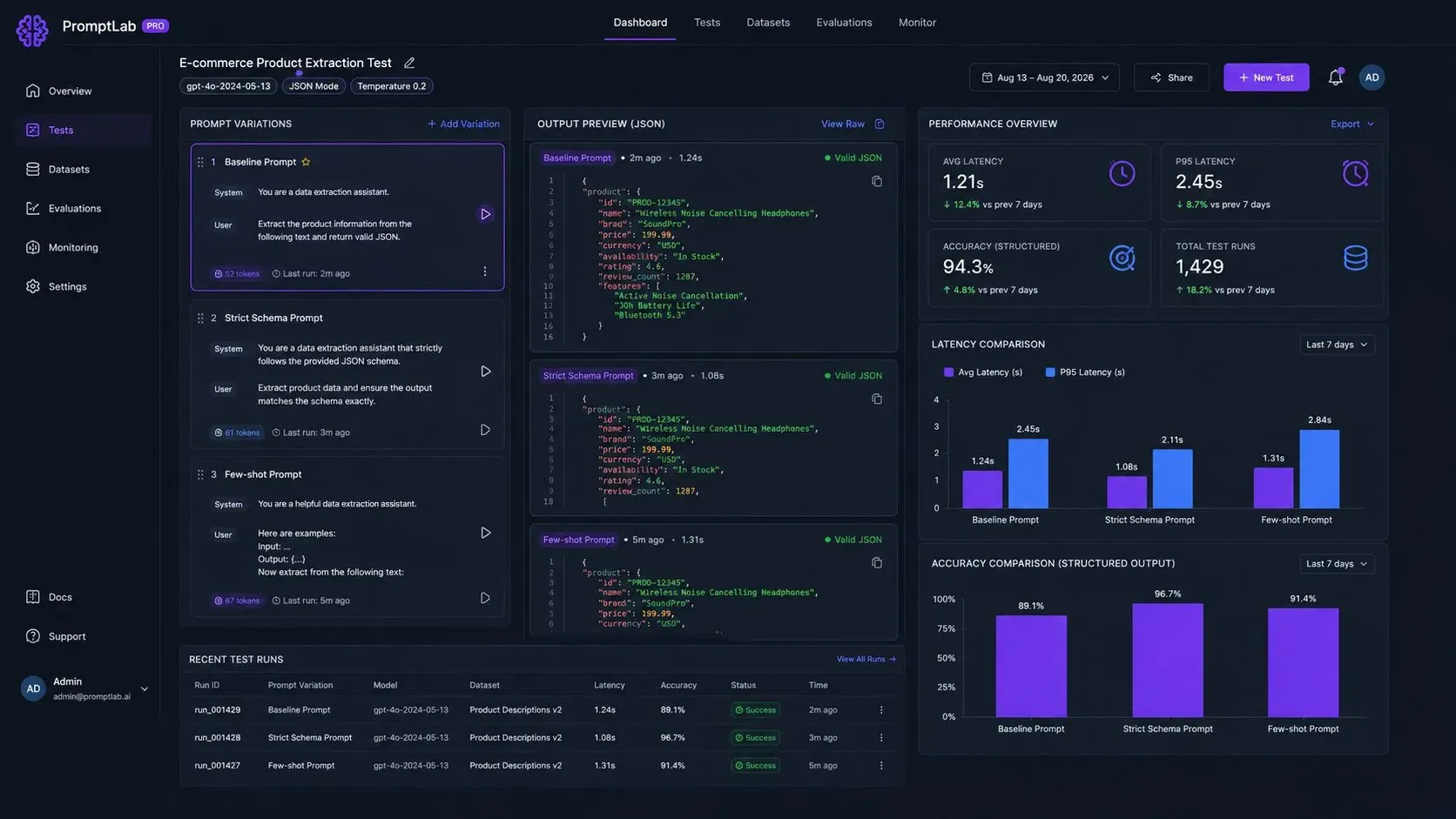
Prompt engineering involves far more than typing questions into a chat window. An AI Prompt Engineer designs structured instruction sets, creates few-shot evaluation benchmarks, and tests system prompts to ensure models return reliable, formatted data every single time.
Companies hire prompt specialists because poor prompts lead to hallucinations, application crashes, and wasted API spend. If you understand model behavior, edge cases, and data formats like JSON and XML, this role offers strong pay.
Key Daily Tasks
- Write and maintain version-controlled system prompts for production applications.
- Test model outputs against edge cases to prevent false claims and unwanted behavior.
- Build few-shot example sets to improve accuracy on domain-specific tasks.
Practical Project Idea
Publish an open-source prompt evaluation repository on GitHub. Show how you tested five different prompt variations across 100 sample inputs. Document token costs, response speed, and output consistency across different models.
3. AI Solutions and Implementation Consultant
Typical Salary Range: $110,000 – $175,000 per year
Monthly Client Retainer: $5,000 – $15,000 / month
Primary Tools: Zapier Central, Slack bots, Notion AI, Microsoft Copilot Studio, Google Workspace AI
Many small and medium businesses know they need AI, but their managers do not know which tools to choose or how to train their staff. An AI Solutions Consultant reviews daily operations, identifies repetitive manual work, sets up the right software, and trains team members.
This role rewards business communication and software setup skills over theoretical math. If you have a background in sales, marketing, operations, or customer support, you can pair your industry experience with AI tools to earn top consulting rates.
Key Daily Tasks
- Audit company workflows to spot high-value tasks that AI can assist.
- Select, configure, and connect commercial AI tools for client teams.
- Run live training workshops and write clear operating guides for staff.
Practical Project Idea
Write a detailed business teardown. Pick an industry you know well, such as real estate management or dental clinics. Map out how a three-tool AI setup saves that business 15 hours of manual work each week.
4. AI QA, Red Teamer, and Evaluation Lead
Typical Salary Range: $100,000 – $150,000 per year
Freelance Hourly Rate: $50 – $125 / hour
Primary Tools: Human feedback platforms, evaluation harnesses, prompt injection tools, Python testing scripts
AI systems can fail in unexpected ways. They can leak sensitive data, generate incorrect answers, or break when users enter tricky questions. An AI Quality Assurance (QA) Evaluator or Red Teamer deliberately tests models to find safety flaws, security gaps, and logical errors before release.
This role demands critical thinking, patience, and strong attention to detail. You do not need a computer science degree, but you must know how users interact with software and how to document bugs clearly.
Key Daily Tasks
- Run structured tests to find prompt injection and security gaps.
- Grade model responses for factual accuracy, safety, and tone.
- Build automated test suites that check for regressions after model updates.
Practical Project Idea
Create a public safety audit report on an open-source model. Document your testing methods, test prompts, failure rates, and suggested safety guardrails.
5. Conversational AI and Agent Designer
Typical Salary Range: $95,000 – $145,000 per year
Freelance Hourly Rate: $60 – $130 / hour
Primary Tools: Voiceflow, Botpress, ElevenLabs, Vapi, Twilio, Retell AI
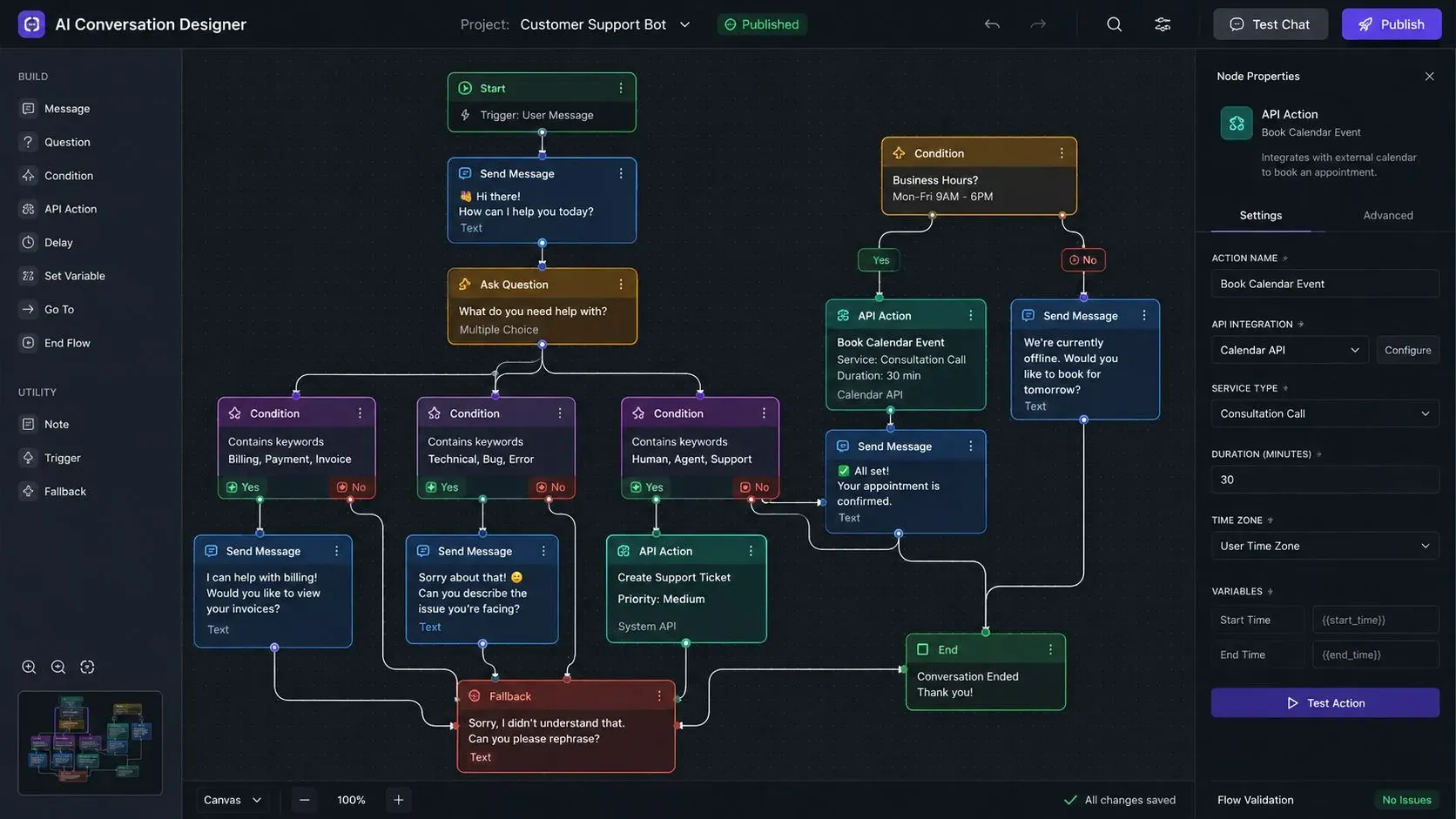
Customer service is moving toward intelligent voice and chat agents that can take real actions. These agents can book appointments, check order status, or route support calls. A Conversational AI Designer maps user dialogue paths, sets up logic flows, and connects the agent to live databases.
Strong conversation designers combine user experience (UX) writing with basic programming logic. If you understand conditional logic (if-this-then-that) and know how natural conversations flow, you can build agents that replace clunky phone menus.
Key Daily Tasks
- Design natural conversational paths, fallback responses, and escalation rules.
- Connect chat and voice interfaces to external calendars, databases, and CRMs.
- Review user transcripts to fix conversational bottlenecks and drop-off points.
Practical Project Idea
Build a functional voice or chat booking agent on Voiceflow or Botpress for a mock clinic or repair shop. Connect it to a real calendar so hiring managers can test the booking flow live.
6. AI Technical Writer and Documentation Lead
Typical Salary Range: $90,000 – $135,000 per year
Contract Hourly Rate: $50 – $100 / hour
Primary Tools: Markdown, Git, Postman, Mintlify, Readme.com, API testing tools
AI companies release new models, developer tools, and API features every month. Software engineers rarely have time to write clear beginner tutorials, setup guides, and model cards. An AI Technical Writer turns complex code features into clear, step-by-step guides that developers and business clients can follow.
If you write clear English and test your code snippets before publishing, you can secure high-paying full-time or contract roles without a degree.
Key Daily Tasks
- Write clear API reference documentation, quickstart tutorials, and SDK guides.
- Document model capabilities, token limits, response times, and safety guidelines.
- Create sample code repositories in Python or JavaScript to help developers get started.
Practical Project Idea
Find an open-source AI project with confusing documentation. Rewrite its quickstart guide to be clear and simple. Submit your update as a GitHub pull request and link to it in your job applications.
Non-Degree AI Careers at a Glance
The table below summarizes the top high-paying AI jobs that do not require a college diploma:
| Job Role | Typical Annual Salary | Core Skills & Tools | Best Prior Experience | Winning Portfolio Project |
|---|---|---|---|---|
| AI Automation Specialist | $100,000 – $145,000 | Make, Zapier, n8n, Python, Webhooks | Operations, IT Support, Admin | 3 multi-step automated workflows with video demos |
| Prompt & Context Specialist | $100,000 – $160,000 | System prompts, JSON schemas, Evaluation | Writing, Linguistics, Logic | Public prompt evaluation dataset comparing model results |
| AI Solutions Consultant | $110,000 – $175,000 | Workflow audits, Tool setup, Team training | Sales, Marketing, Project Management | Industry AI implementation plan and workflow blueprint |
| AI QA & Red Teamer | $100,000 – $150,000 | Safety testing, Jailbreak tests, Bug tracking | QA Testing, Compliance, Research | Public vulnerability audit of an open-source model |
| Conversational AI Designer | $95,000 – $145,000 | Voiceflow, Botpress, Vapi, APIs | UX Writing, Customer Support | Working voice or chat booking agent with live API calls |
| AI Technical Writer | $90,000 – $135,000 | Markdown, API testing, Git, Quickstart guides | Technical Writing, Journalism | Published developer guides and merged GitHub pull requests |
Why Companies Hire AI Talent Without College Degrees
The artificial intelligence sector moves too fast for traditional university programs. A computer science syllabus written three years ago often misses the latest model architectures, API patterns, and agent tools used today.
Hiring managers in this field focus on three main factors:
- Demonstrated Ability: Can you build a working tool that runs without breaking? A public GitHub repository or live demonstration proves your capability faster than a diploma.
- Speed of Learning: Can you test a new tool over the weekend and explain it to a client on Monday? Self-taught builders excel at quick learning.
- Focus on Business Results: Businesses buy AI tools to save time, lower costs, and increase sales. Candidates who understand practical business goals stand out immediately.
How to Build a Proof-of-Work Portfolio That Replaces a Resume
When you do not have a college degree, your portfolio serves as your primary credential. Follow this four-step roadmap to build proof of work that attracts hiring managers:
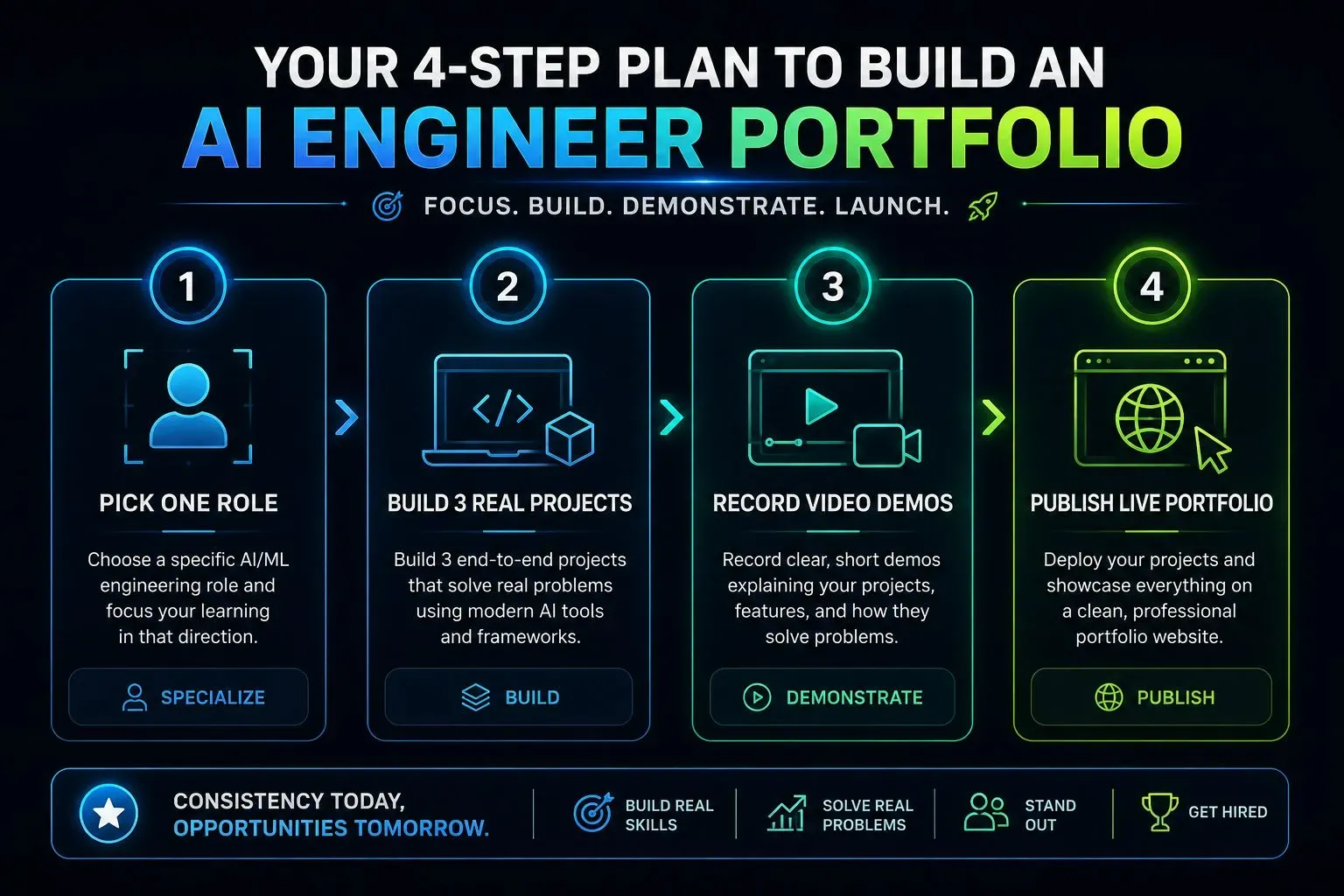
Step 1: Pick One Specific Role
Do not try to learn every AI tool at once. Decide whether you want to focus on workflow automation, prompt architecture, conversational agents, or technical documentation. Specializing in one area makes your portfolio memorable.
Step 2: Build 2 to 3 Real-World Projects
Avoid basic tutorial projects like simple weather checkers. Instead, build systems that solve real business problems:
- An automated lead filtering system that enriches sales data.
- A customer onboarding voice agent that books appointments into Google Calendar.
- A structured evaluation framework that tests model accuracy for legal or financial summaries.
Step 3: Record Short Video Demos
Hiring managers rarely read long code files during their first review. Record a two-minute Loom video for each project:
- Explain the business problem you solved.
- Show the live system running in real time.
- Point out how you handled errors and edge cases.
Step 4: Publish Everything on a Clean Personal Website
Host your projects on a fast, simple website. Include direct links to your GitHub code, the live demo, and your video walkthroughs. Place your contact email and LinkedIn link at the top of the page.
4 Common Mistakes That Stop Non-Degree Candidates From Getting Hired
Avoiding these common job-hunting mistakes will save you months of wasted effort.
Mistake 1: Relying Only on Course Certificates
Finishing an online course is a great starting point, but certificates alone do not convince employers. Build your own original projects to prove you can apply what you learned.
Mistake 2: Applying Only Through Big Job Boards
Traditional corporate portals often use automated filters that screen out resumes without degrees. Target startups, mid-sized agencies, and remote-first companies where hiring managers review portfolios directly.
Mistake 3: Hiding Your Problem-Solving Process
Employers want to see how you handle unexpected issues. When sharing projects, explain what went wrong during development and how you fixed it.
Mistake 4: Claiming Broad Skills Without Depth
Calling yourself a generalist makes you blend in with thousands of applicants. Calling yourself an "n8n Workflow Automation Specialist" or "Voiceflow Agent Builder" makes you the clear solution for specific job openings.



Leave a Comment
Your comment is completely private and secure. We never publish comments publicly on our website. Your message will be sent directly to our team.