


Character AI made conversational roleplay widely popular by letting millions of people interact with fictional personas, anime favorites, and custom bots. However, as user sessions grow longer and storylines become more complex, many users find themselves looking for alternatives to the platform.
The frustrations usually center around three major bottlenecks:
- The Short Memory Window: In extended chats, a bot often forgets critical backstory elements, names, or key plot points by message 25.
- Aggressive Content Filtering: The platform frequently interrupts creative fiction, dark fantasy themes, villain dialogue, and intense dramatic roleplay scenarios with rigid filter warnings.
- Bot Purges and Zero Data Export: In February 2026, automated moderation waves removed thousands of community and private bots without warning, leaving creators with no way to export their chat logs or character definitions.
If you want a character ai alternative with longer memory, better creative freedom, or self-hosted control, this guide breaks down the 10 best character ai alternatives available in 2026.
Best Character AI Alternatives Comparison Table
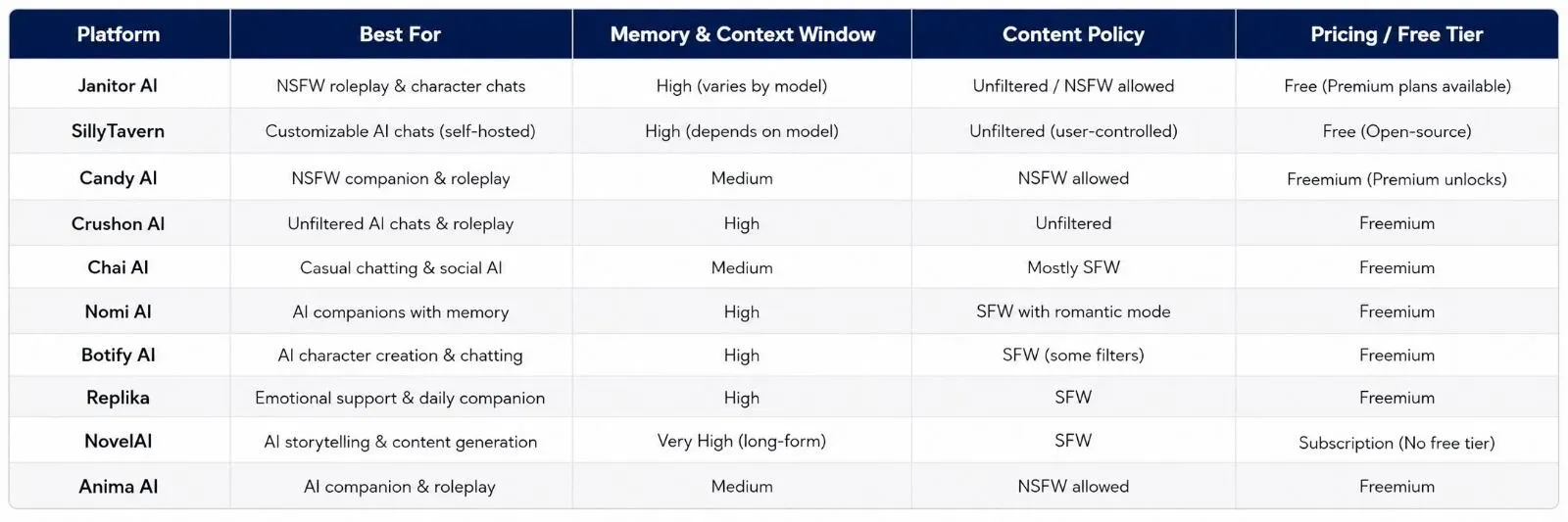
This alternatives comparison table summarizes how the top platforms compare across memory stability, content policies, setup requirements, and pricing:
Why Users Are Moving Away from Character.ai
While character ai offers a massive character library, its core architecture has not kept pace with dedicated roleplay engines:
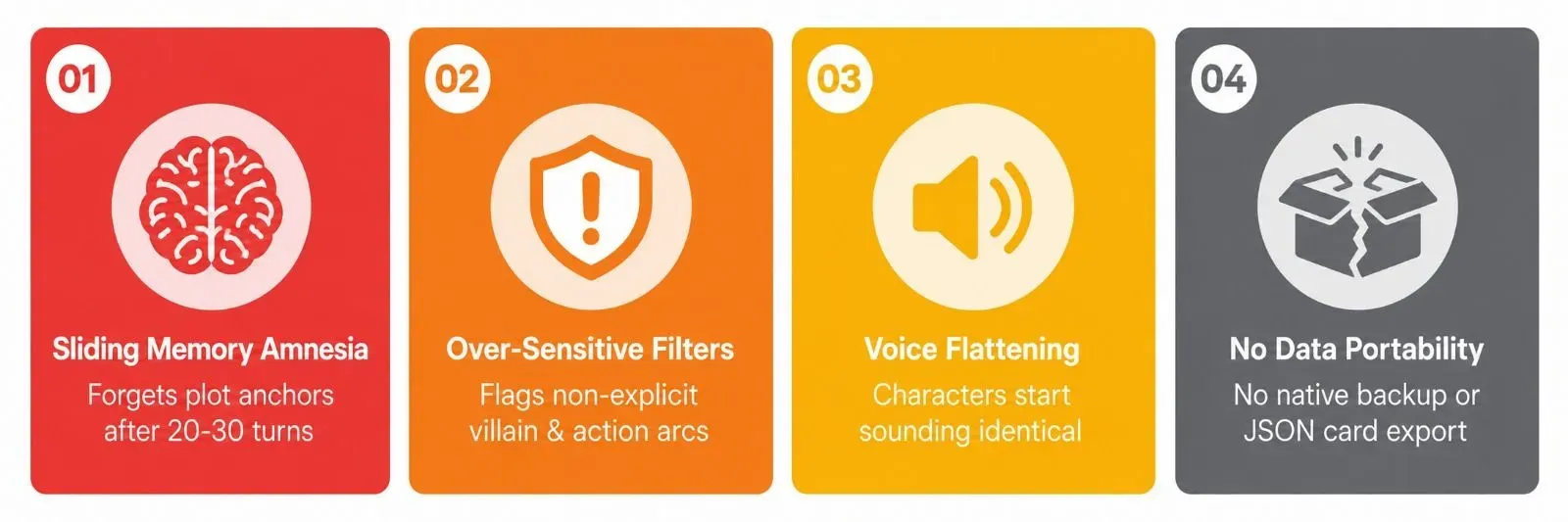
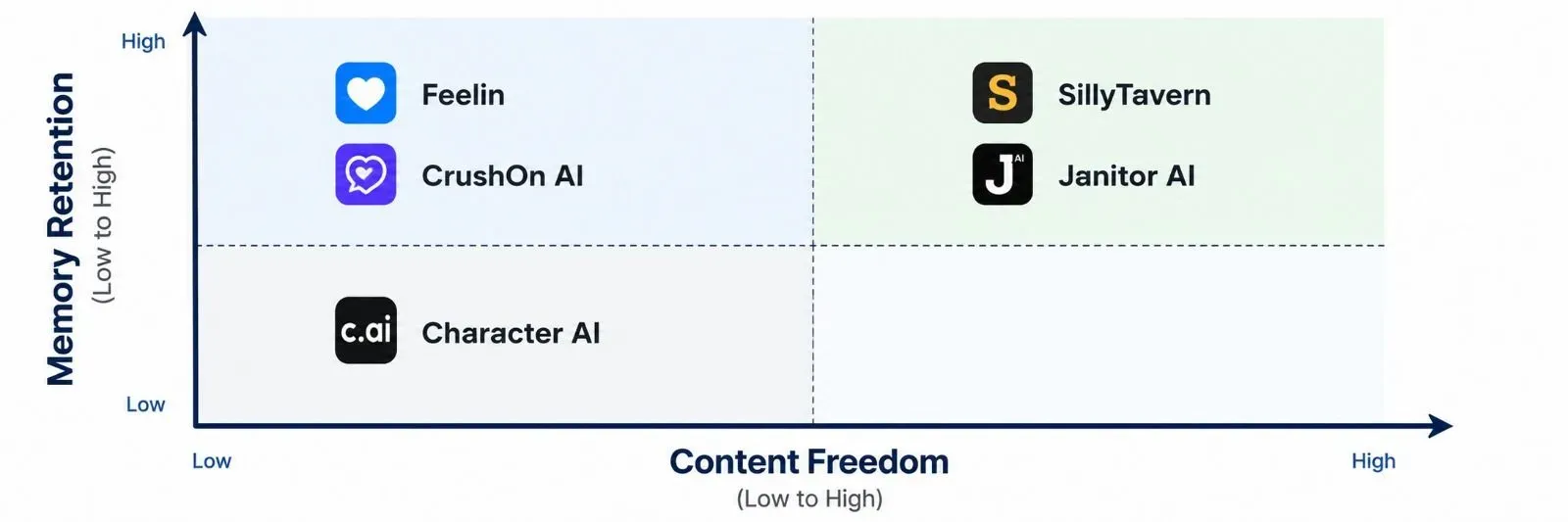
When you write an intricate fantasy quest or slow-burn story, sudden safety redirects destroy immersion. Modern ai chatbots solve this by using wider context windows, vector-based memory recall, and specialized character cards.
In-Depth Reviews: The 10 Best Alternatives to Character AI
1. Janitor AI: Best Free Community Roleplay Platform
Janitor AI has become one of the most popular direct replacements for character.ai. It features a massive, community-driven directory of bots spanning anime, video games, original fiction, and fantasy.
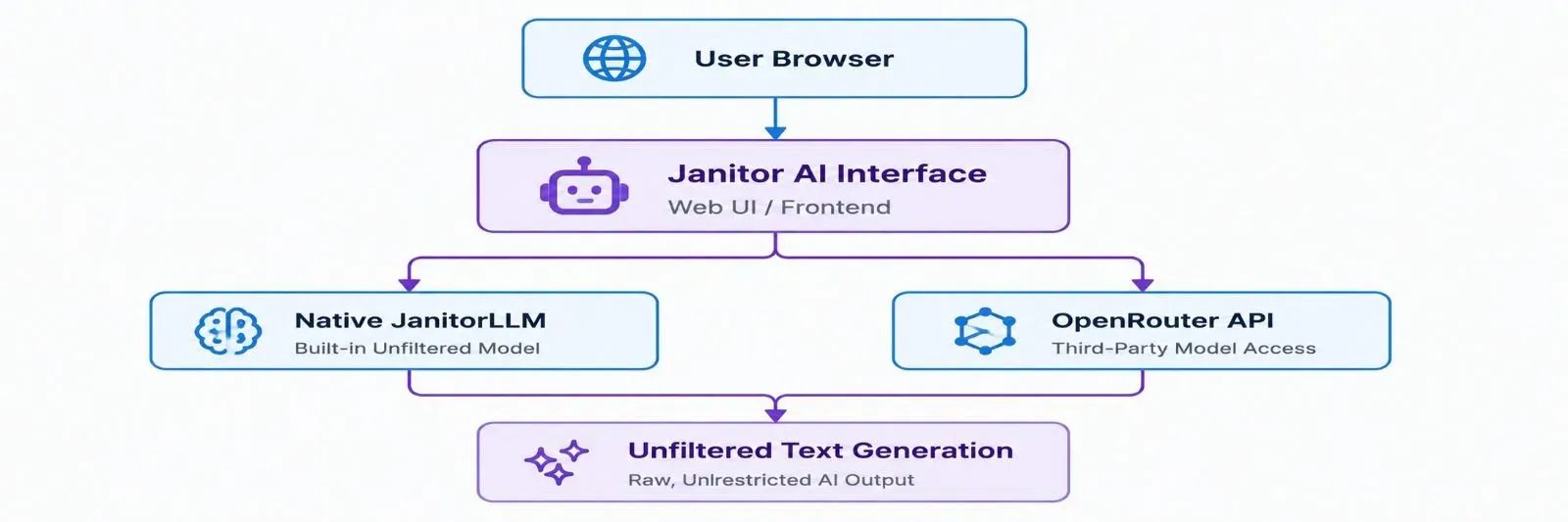
Memory and Performance: The native model (JanitorLLM) handles moderate context windows, but users can connect third-party APIs (such as OpenRouter, DeepSeek, or Claude) for sharper reasoning.
Content Flexibility: It allows complete freedom on text generation without sudden safety block screens.
Key Advantage: A fully free web app that requires no monthly subscription for basic use.
Best For: Users who want a large community bot catalog with fewer content restrictions.
2. SillyTavern: Best Open-Source Interface for Power Users
SillyTavern is not a hosted website; it is an open-source user interface that runs locally on your PC, Mac, or Android phone.
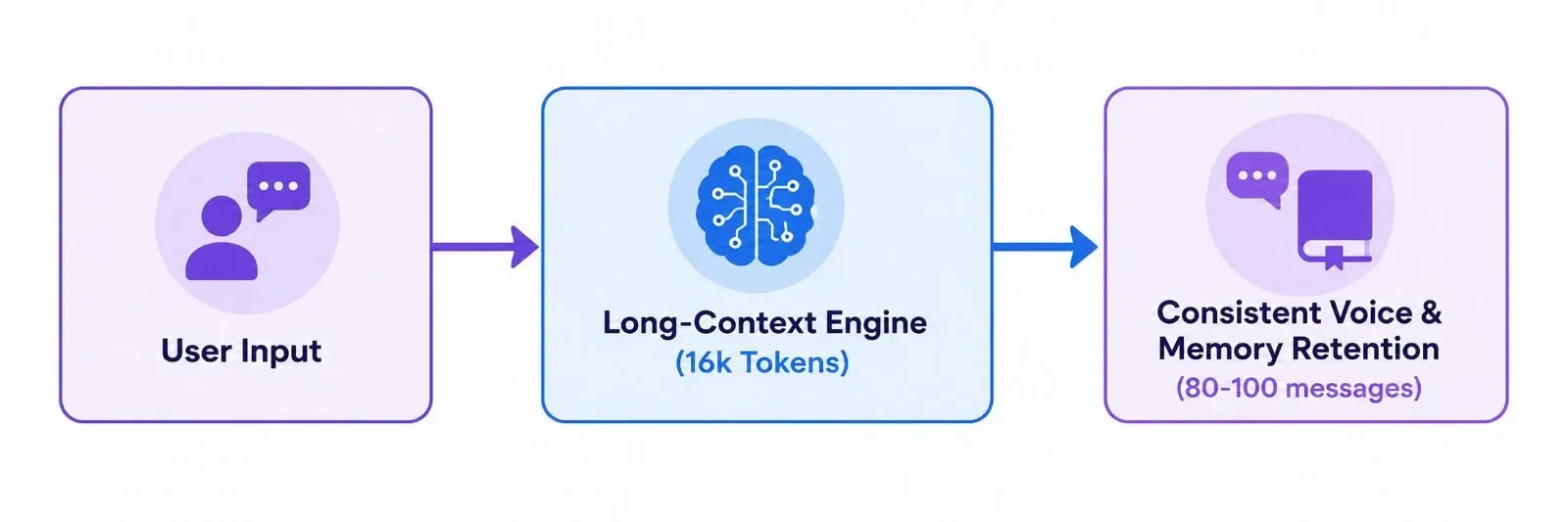
Memory and Control: SillyTavern uses structured Lorebooks and World Info files. When you mention a specific city or faction, the interface automatically inserts that lore into the prompt.
Content Flexibility: SillyTavern gives users full control over model generation parameters, temperature, and system prompts. There are zero platform-level restrictions.
Key Advantage: You own all your character files and conversation histories locally on your disk.
Best For: Tech-savvy creators who want character creation and world-building tools without platform censorship.
3. Candy AI: Best for Visual Customization and Voice
Candy AI is a hosted ai companion platform designed for immersive single-character connections. It pairs conversational text with realistic visual generation and voice messaging.
Memory and Performance: Remembers ongoing conversation threads, personal preferences, and shared history across multiple sessions.
Content Flexibility: Provides an unrestricted environment for mature roleplay and creative romance plots.
Key Advantage: Simple guided character builder that includes voice audio notes and image generation without technical setup.
Best For: Casual users looking for a polished ai chat platform with zero configuration.
4. Crushon AI: Best for Long-Context Memory
Crushon AI addresses the memory loss problem by providing large context windows of up to 16,000 tokens on its advanced tiers.
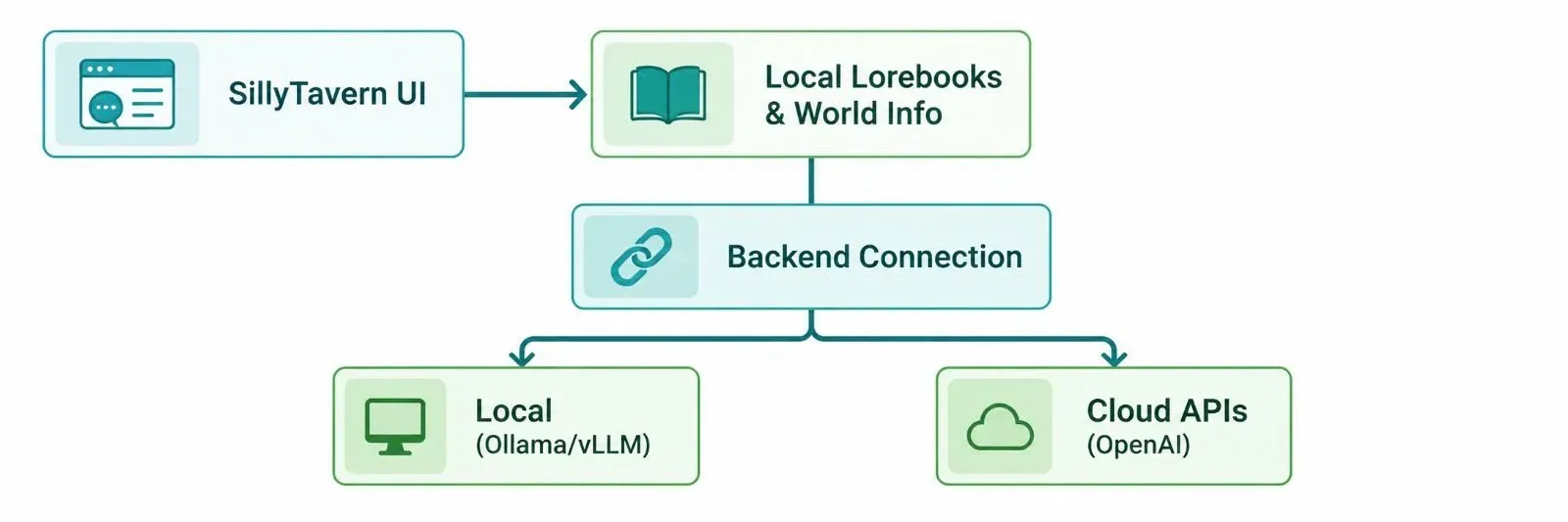
Memory and Performance: It retains details from 80 to 100 messages prior, preventing the mid-story amnesia common on smaller systems.
Content Flexibility: Offers switchable safety filters, allowing creators to toggle between standard and mature narrative modes.
Key Advantage: Excellent subgenre organization, including mafia dramas, enemies-to-lovers, and anime AUs.
Best For: Writers who want their characters to stay in character across long, multi-turn character arcs.
5. Chai AI: Best Mobile-First Roleplay App
Chai is built specifically for smartphone users on iOS and Android, offering a swipe-based discovery feed of millions of community creations.
Memory and Performance: Optimized for fast, responsive mobile exchanges rather than multi-chapter novels.
Content Flexibility: Features more relaxed moderation than mainstream app store competitors.
Key Advantage: High-speed responses and zero setup friction on mobile devices.
Best For: Quick, entertaining roleplay sessions on the go.
6. Nomi AI: Best for Realistic Long-Term Companionship
Nomi AI is an ai companion engine engineered specifically for long-term memory continuity.
Memory and Performance: Uses vector-backed memory systems that recall conversational details, emotional states, and inside jokes across weeks of interaction.
Content Flexibility: Mature-permissive for adult users while maintaining realistic personality boundaries.
Key Advantage: Group chats allow multiple ai characters to converse with each other and the user in the same room.
Best For: Users seeking deep personal connection and consistent relationship memory.
7. Botify AI: Best for Multi-Bot Group Chats
Botify AI provides a fast, no-code environment for chatting with digital humans, anime icons, and historical figures.
Memory and Performance: Reliable for short-to-medium conversations with built-in text-to-speech.
Group Chat: Supports multi-bot rooms where up to 10 characters can interact in a shared scenario.
Best For: Fun group dynamics and casual text-based entertainment.
8. Replika: Best for Empathetic Everyday Support
Replika focuses on emotional wellness, mood tracking, and supportive dialogue through an interactive 3D avatar.
Memory and Performance: Tracks user habits, personal goals, and emotional patterns over months of communication.
Interaction: Features interactive voice calls, augmented reality (AR) modes, and mindfulness exercises.
Best For: Users who want a supportive virtual friend rather than fictional fantasy roleplay.
9. NovelAI: Best Text-Adventure and Lorebook Engine
NovelAI is a subscription-based creative writing companion that uses custom-trained models for storytelling.
Memory and Performance: Its Lorebook system allows you to define complex world rules, character traits, and inventory items that trigger automatically during generation.
Content Flexibility: Completely private, encrypted, and unfiltered for all fiction genres.
Best For: Novelists, tabletop RPG players, and serious writers who want a document editor rather than a chat bubble.
10. Anima AI: Best for Guided Personal Growth
Anima combines virtual companionship with interactive roleplay quests designed to build communication confidence.
Memory and Performance: Adapts to user conversational styles over time and unlocks new avatar traits as conversations progress.
Features: Daily check-ins, mini-games, and reflective prompts.
Best For: Beginners looking for a structured, friendly chatbot.
How to Choose the Right Alternative for Your Use Case
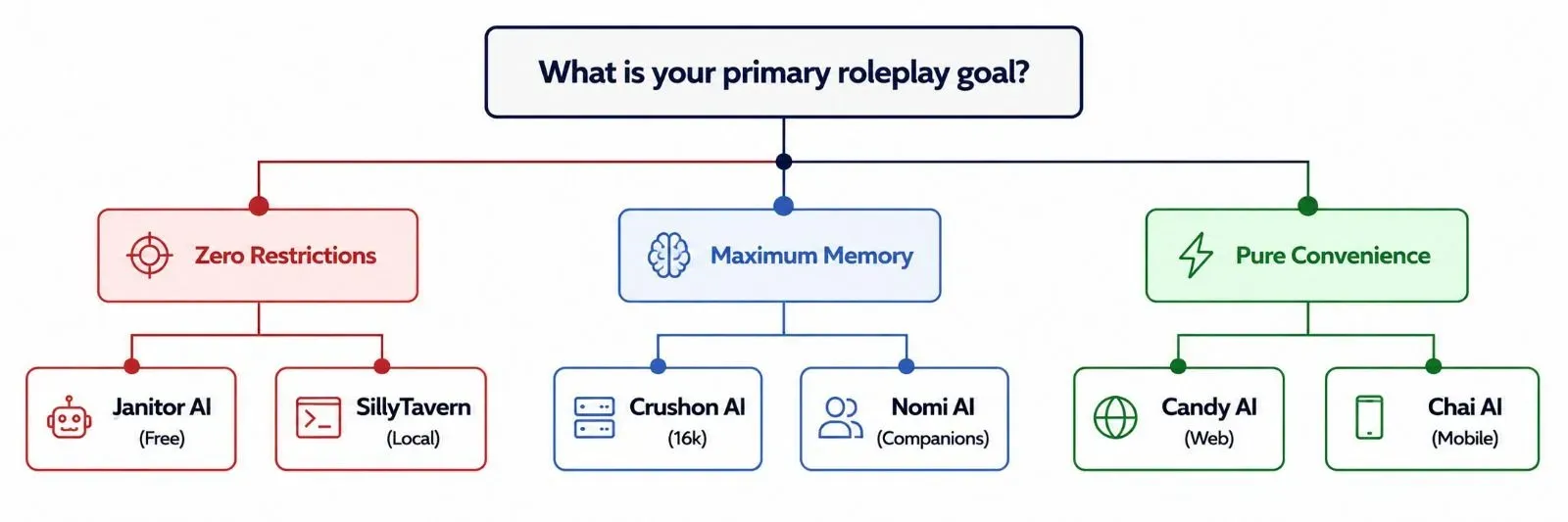
If you want complete privacy and zero monthly fees: Run SillyTavern with local models or use Janitor AI.
If you want deep, long-term memory across weeks: Choose Nomi AI or Crushon AI.
If you want a mobile app with zero configuration: Download Chai AI.
If you want structured creative writing and lorebooks: Choose NovelAI.
How to Migrate Your Favorite Characters from Character.ai
Because Character AI lacks an export button, follow these steps to recreate your favorite bots on platforms like Janitor AI, Crushon AI, or SillyTavern:
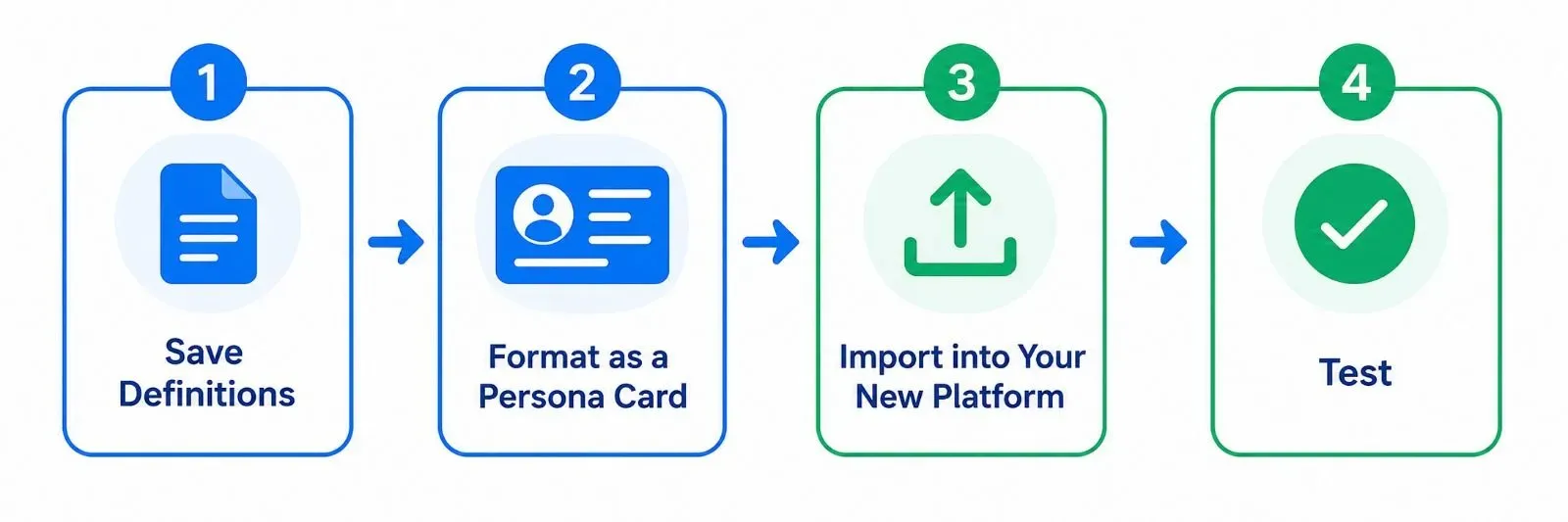
- Step 1: Save Character Information: Open your Character AI bot settings and copy the Character Name, Short Description, Greeting Message, and the Definition (Advanced Description) text.
- Step 2: Format as a Persona Card: Use standard character definition formats (such as W++ or plain JSON attributes) to define personality traits, speaking habits, and example dialogue lines.
- Step 3: Import into Your New Platform: Paste the greeting and definitions into the character creation panel of your chosen alternative platform.
- Step 4: Test: Verify that your character responds with the correct personality, voice, and backstory.
Leave a Comment
Your comment is completely private and secure. We never publish comments publicly on our website. Your message will be sent directly to our team.