


When DeepSeek disrupted the artificial intelligence landscape with its open-weights reasoning models, developers and businesses gained access to near-frontier intelligence at a fraction of standard API costs. However, running critical business operations or daily workflows on DeepSeek has revealed several operational friction points. Server overloads during peak usage hours, data residency concerns regarding servers in China, missing multimodal capabilities, and an evolving developer ecosystem have led many users to seek alternatives.
Whether you need stronger coding support, zero-knowledge data privacy, deeper workflow integrations, or verified web search, finding the ideal DeepSeek alternative depends on your specific operational requirements.
Below is a quick overview of the 10 best DeepSeek alternatives in 2026, followed by an in-depth comparative analysis to help you select the right AI tool.
Quick Comparison: 10 Best Alternatives to DeepSeek in 2026
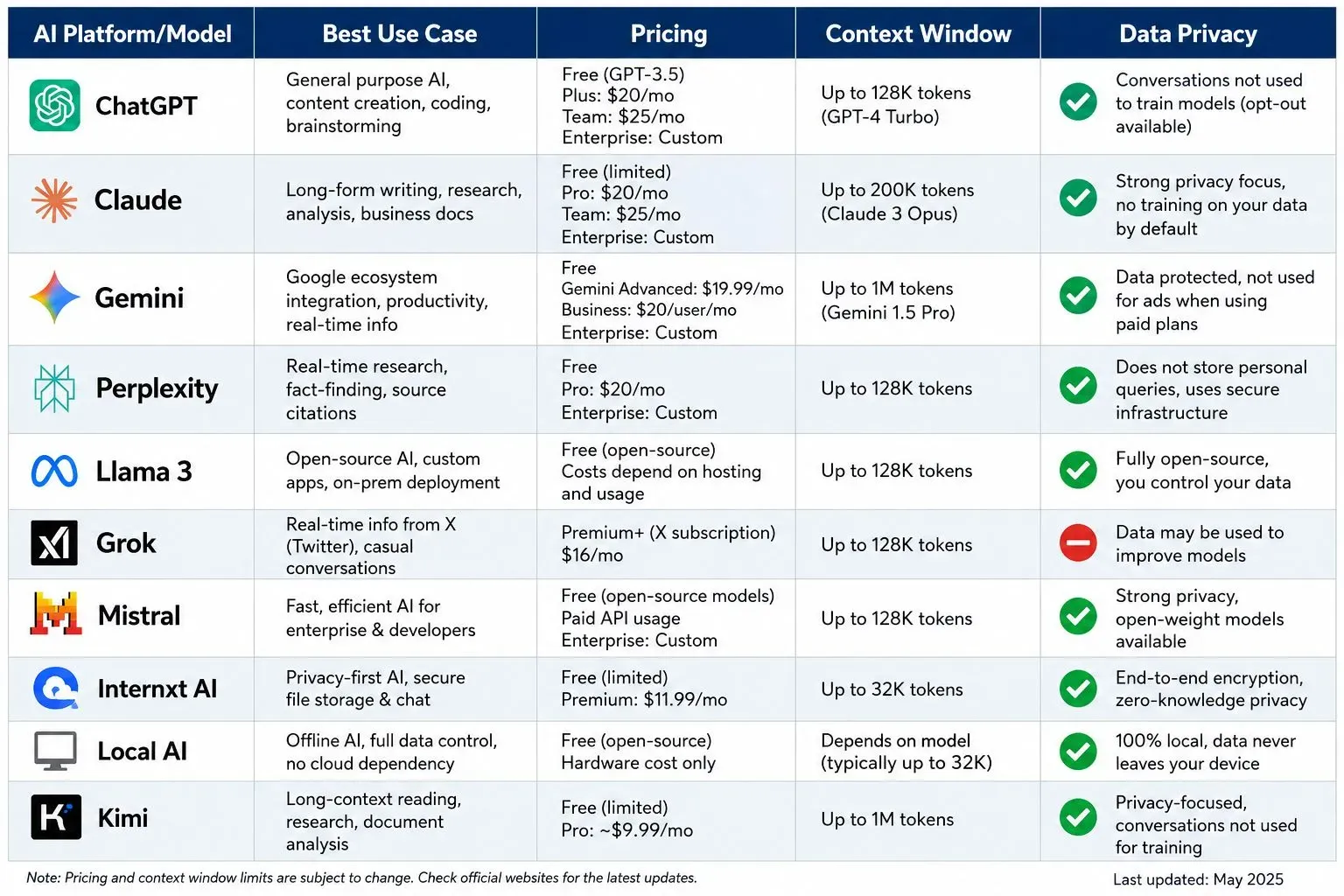
Why Users Are Choosing to Switch From DeepSeek
While DeepSeek focuses on pushing raw inference costs down, several technical and compliance factors drive organizations and individuals to switch from DeepSeek to apps like ChatGPT, Claude, or local ai systems:
- Server Capacity and Connection Stability: High traffic volumes frequently trigger rate limits or connection dropouts on DeepSeek’s hosted web interface and API endpoints during peak business hours.
- Data Residency and Privacy Laws: DeepSeek’s official privacy documentation confirms that user prompts and account telemetry on their hosted web services are stored on servers in China. For businesses subject to EU GDPR, US federal compliance, or strict corporate confidentiality, sending sensitive codebases or customer documents to overseas infrastructure creates regulatory risks.
- Multimodal Limitations: While DeepSeek performs well on text-based math and logic, modern technical workflows require multimodal capabilities—such as processing charts, UI wireframes, video feeds, and voice prompts directly within a single prompt.
- Ecosystem Maturity: Established platforms like OpenAI and Anthropic offer extensive plugin libraries, software development kits (SDKs), enterprise governance tools, and direct integrations with cloud infrastructure.
What to Look for When Evaluating DeepSeek Alternatives
Choosing a new AI solution requires matching the platform’s core architecture to your daily tasks rather than relying strictly on synthetic benchmark scores.
- Data Location and Compliance: Identify where your prompts live. If privacy is paramount, choose zero-knowledge encrypted platforms or run open-weight models like Llama locally.
- Inference Cost Economy vs. Subscription Value: If you process millions of tokens daily, pay-per-token API pricing matters more than flat monthly subscription fees.
- Task Specialization: Certain ai models excel at agentic coding tasks, while others are tools best suited for long-form research or office automation.
- Multimodal AI Capabilities: Check if the tool natively parses images, audio recordings, and structural data without requiring external preparation steps.
In-Depth Analysis of the Best DeepSeek Alternatives
1. ChatGPT (OpenAI): Ideal DeepSeek Alternative for Coding and Ecosystem Maturity
Developed by OpenAI, ChatGPT remains the industry benchmark for general-purpose conversational intelligence and software engineering.
Key Features:
- Advanced Multi-Modal Processing: Handles text, visual architecture diagrams, and direct audio interactions inside one unified chat session.
- Expansive Developer Ecosystem: Offers function calling, Custom GPTs, and stable API endpoints designed for high-volume enterprise production.
- Integrated Web Search and Code Execution: Features an inline Python execution environment (Advanced Data Analysis) alongside live web browsing.
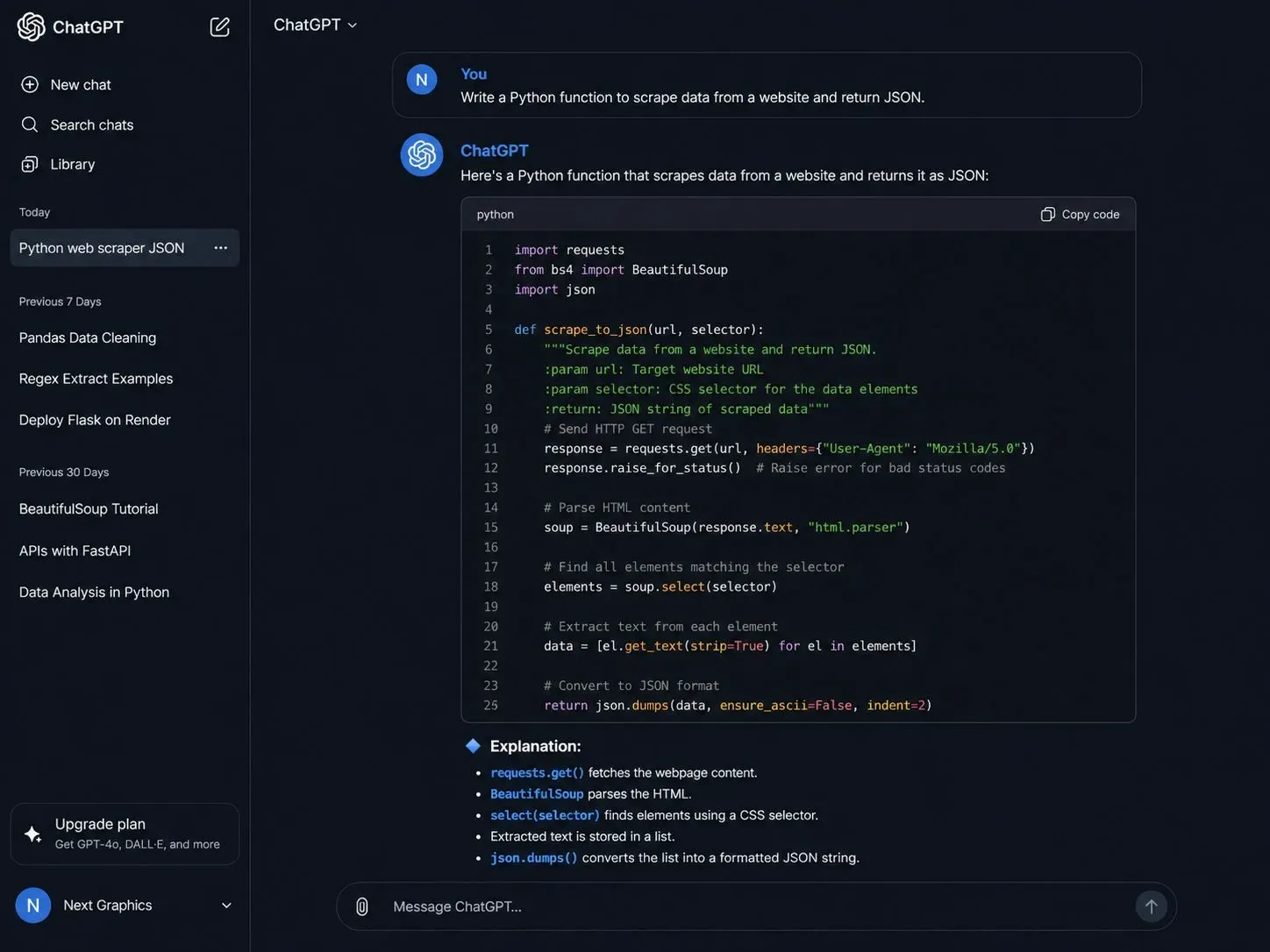
User: Write a Python function to scrape data from a website and return JSON.
ChatGPT: [Responds with a 25-line Python code block with syntax highlighting, inline comments, and a detailed explanation of the logic.]
Strengths: Delivers top-tier accuracy for complex multi-language coding tasks and automated debugging. Features a massive community library of custom prompts and pre-built operational assistants. High system reliability and API uptime compared to emerging open-weight hosting options.
Limitations: Enterprise API token costs accumulate faster than commodity open-weight alternatives. Usage limits apply on high-tier reasoning models during peak network traffic hours.
2. Claude (Anthropic): Best Alternative to DeepSeek for Logic Reasoning and Long Documents
Claude by Anthropic is widely recognized for its nuanced contextual understanding, safe reasoning capabilities, and natural prose.
Key Features:
- Artifacts Workspace: An interactive side-by-side interface for viewing, editing, and rendering frontend code or written documents in real time.
- Extended Context Window: Reads and retains context across massive text inputs, including multi-page technical manuals and entire code repositories.
- Project Knowledge Base: Allows users to pin reference documentation to dedicated project workspaces for consistent background context.
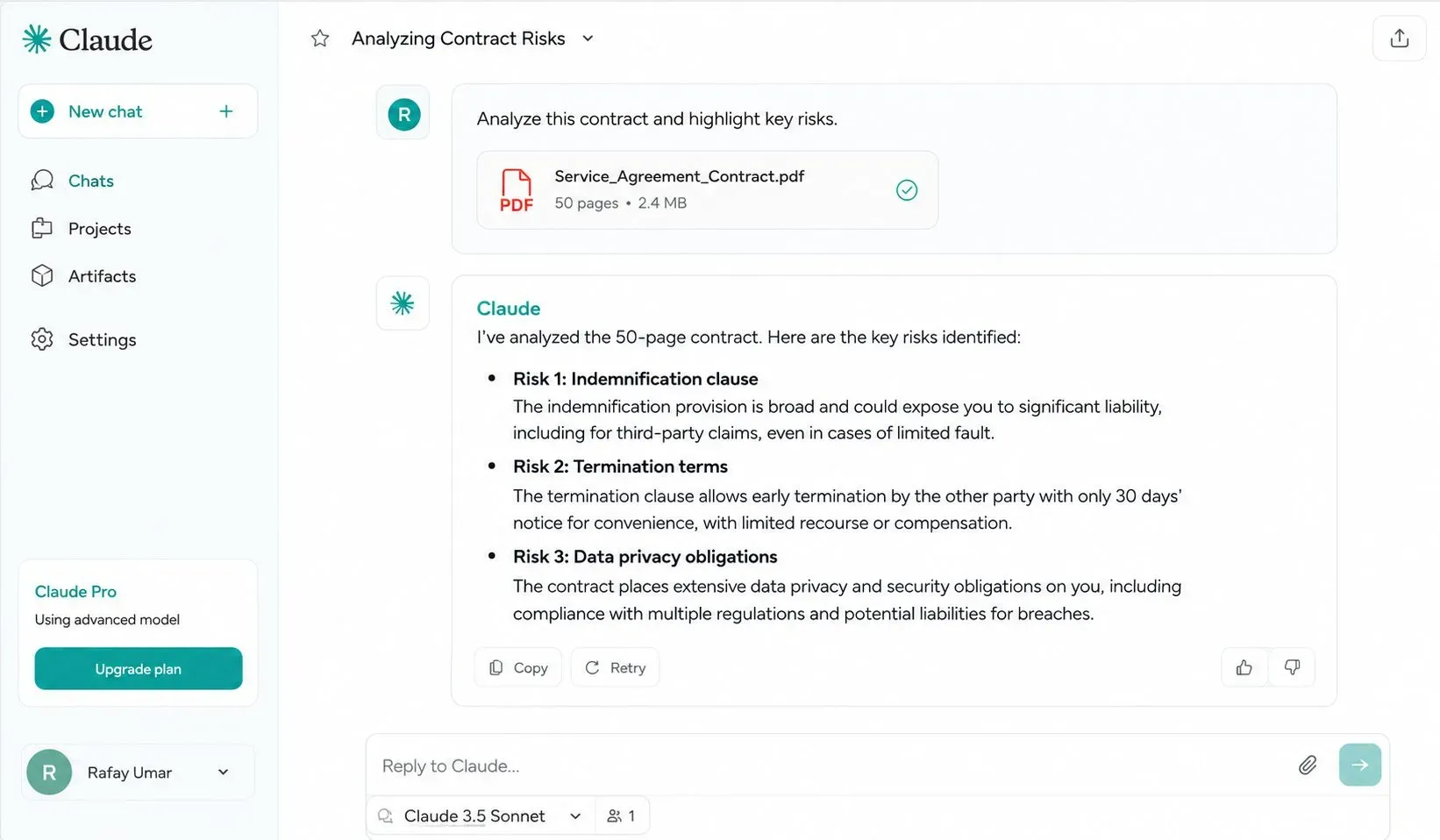
User: Analyze this contract and highlight key risks.
Claude: [Responds with a bulleted list: Risk 1: Indemnification clause, Risk 2: Termination terms, Risk 3: Data privacy obligations.]
Strengths: Generates clear, professional prose free from machine-like repetition. Demonstrates exceptional instruction-following accuracy when processing complex, multi-step prompts. Avoids the logical hallucinations common in smaller reasoning models when reading long documents.
Limitations: Free tier user message caps can interrupt extended technical development sessions. Lacks a native image generation engine.
3. Google Gemini: Best Generative AI Capabilities with Native Google Workspace Support
Google Gemini brings deep integration with productivity applications alongside industry-leading multimodal context capacity.
Key Features:
- Google Workspace Connectivity: Pulls context directly from Google Docs, Gmail, Sheets, and Drive without manual copy-pasting.
- Multi-Million Token Context: Capable of analyzing hours of video footage, extensive audio recordings, and multi-file project archives at once.
- Live Search Grounding: Verifies factual claims directly against Google’s primary search index.
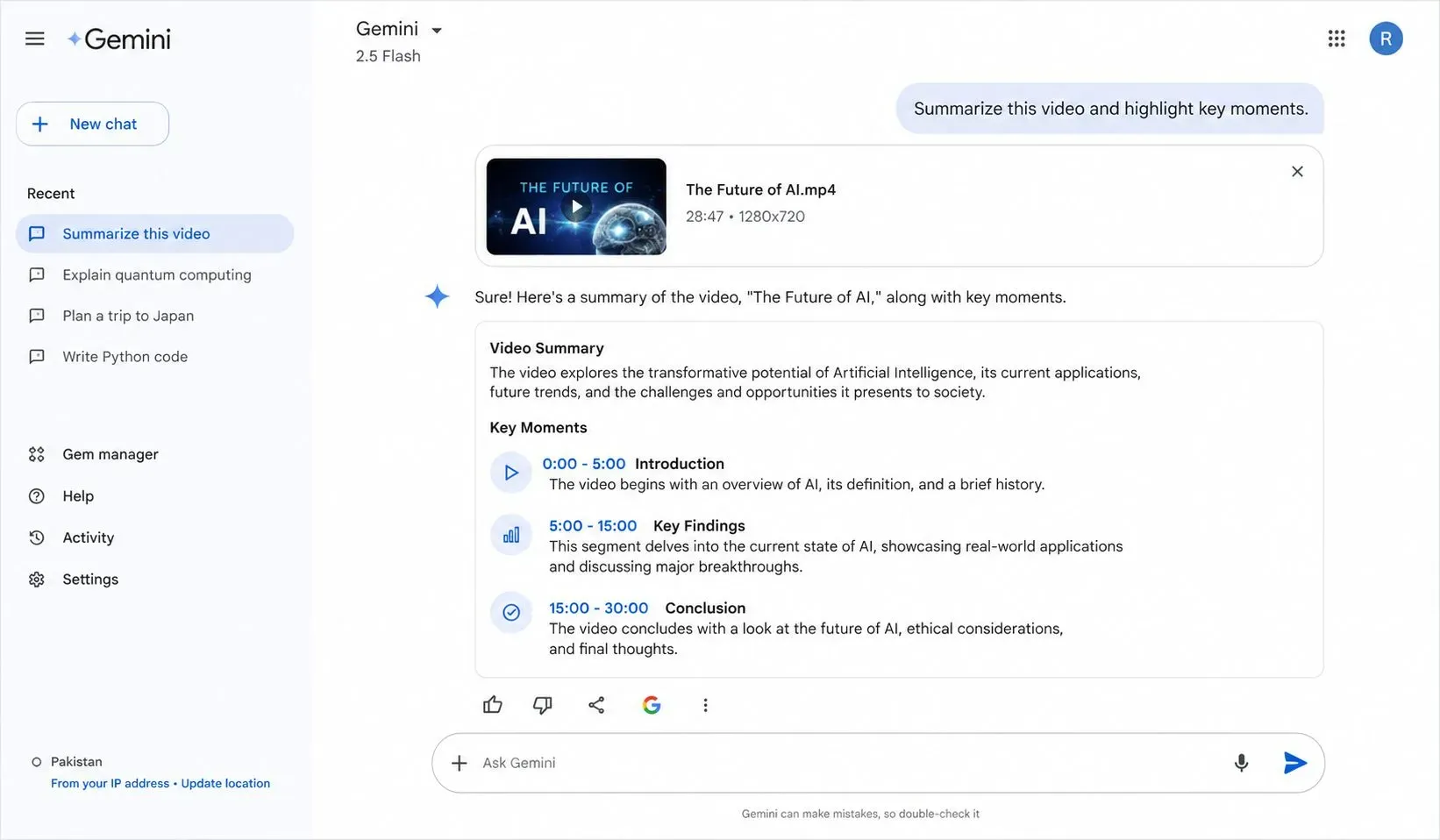
User: Summarize this video and highlight key moments.
Gemini: [Responds with a structured summary: 0:00-5:00: Introduction, 5:00-15:00: Key findings, 15:00-30:00: Conclusion.]
Strengths: Offers the largest context processing window available in commercial web interfaces. Native processing of text, image, audio, and video formats within a single AI model. Generous free plan tier available through its standard web interface.
Limitations: Text responses occasionally lean on corporate formatting that requires custom prompt adjustments. Multi-account management inside enterprise cloud consoles can feel complex.
4. Perplexity AI: Best Versatile AI Assistant for Citation-Backed AI Research
Perplexity AI operates as a hybrid answer engine, combining web crawling with top-tier LLM processing.
Key Features:
- Inline Citation Engine: Every factual statement is backed by clickable, numbered references to active web sources.
- Search Focus Filters: Targets academic databases, YouTube transcripts, or technical documentation repositories specifically.
- Model Switching: Allows Pro subscribers to switch between different underlying reasoning engines for different search tasks.
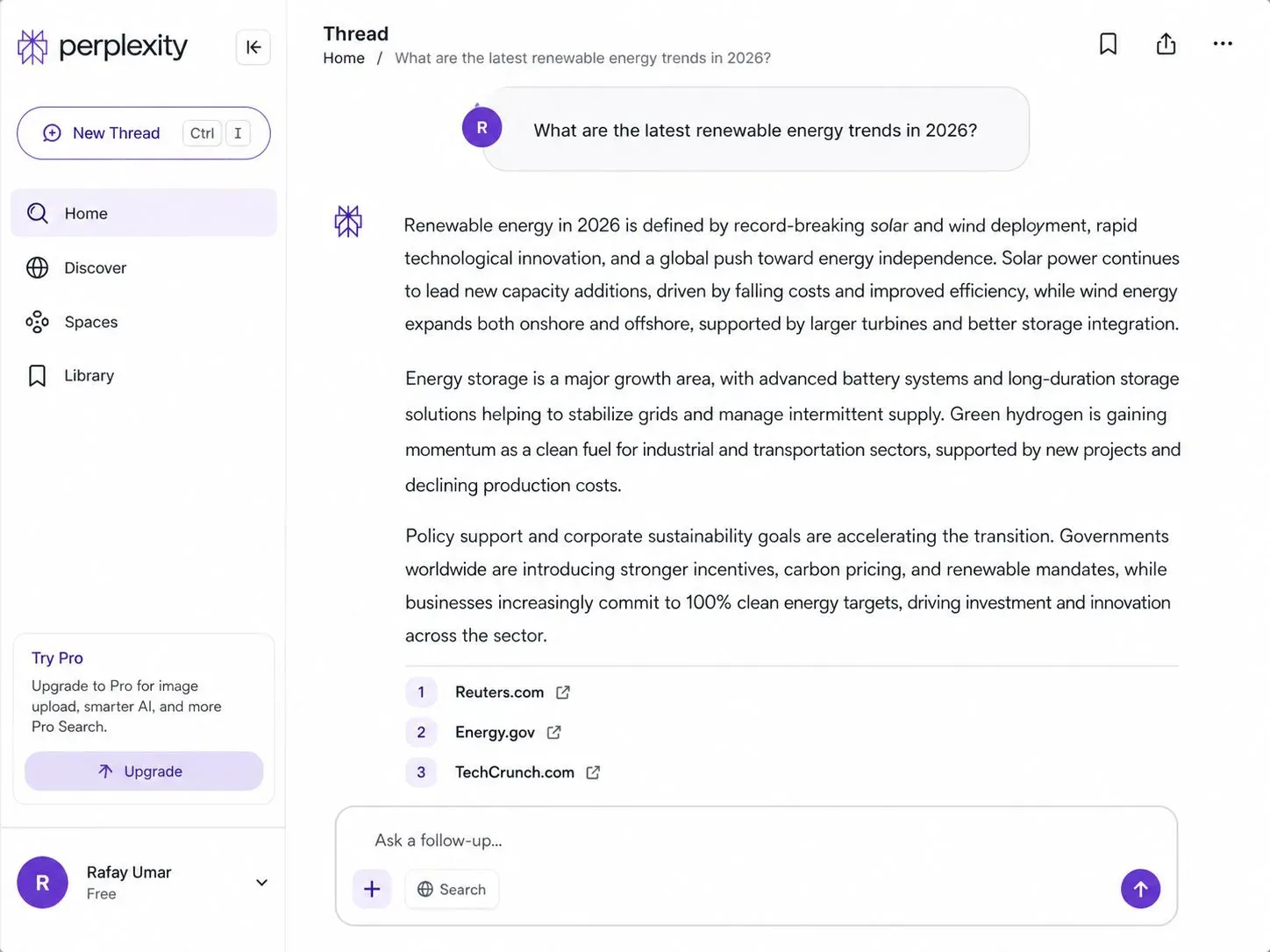
User: What are the latest renewable energy trends in 2026?
Perplexity: [Provides a 3-paragraph summary. At the end, a numbered list of citations shows: 1. Reuters.com, 2. Energy.gov, 3. TechCrunch.com.]
Strengths: Eliminates research time by synthesizing multi-source web search results into structured answers. High transparency for fact-checking and ai research. Excellent user experience for exploratory topics and competitive market analysis.
Limitations: Not designed for multi-file software development or terminal-based coding workflows. Free tier limits the number of deep pro searches per day.
5. Llama 3 & Meta AI: Top Open-Source AI Model for Self-Hosted Custom AI
Meta’s Llama family represents the flagship open-weights alternative for organizations seeking full control over their software stack.
Key Features:
- Open-Weights License: Downloadable model files allow custom fine-tuning and offline hosting on private enterprise infrastructure.
- Hardware Efficiency: Optimized variants run efficiently across enterprise servers, private clouds, or workstation hardware.
- Transparent Architecture: Provides developers with predictable JSON output formatting and clean instruction tuning.
Strengths: Eliminates third-party data privacy risks by keeping prompts entirely inside your local network. Zero ongoing subscription or per-token API fees for self-hosted infrastructure. Backed by an active developer ecosystem building custom fine-tunes and integrations.
Limitations: Requires technical engineering expertise and dedicated GPU hardware to deploy effectively. Lacks an out-of-the-box frontend web chat interface unless paired with local UI software.
6. Grok (xAI): Best New AI Tool for Real-Time Search and Social Data Analysis
Developed by xAI, Grok focuses on high-speed inference and real-time social platform data integration.
Key Features:
- Live Social Data Feed: Accesses live data streams directly from the X platform to monitor breaking trends and public discourse.
- Concise Response Modes: Toggles between detailed technical explanations and direct, point-blank answers.
- Discussion Synthesis: Summarizes long, multi-user conversation threads into concise consensus points.
Strengths: Unmatched speed when analyzing live breaking global news and emerging industry topics. Direct conversational style that skips unnecessary introductory fluff. Clean visual UI optimized for rapid scanning.
Limitations: Requires an active X Premium subscription plan for web access. Developer API tooling is less established than legacy cloud providers.
7. Mistral AI & Qwen: Strongest Open-Weight Alternatives for Low-Cost Developer Pipelines
For developers who want cheap, high-throughput inference without relying on Chinese hosted APIs, Mistral (France) and Qwen (open-weights) provide balanced options.
Key Features:
- European Data Governance (Mistral): Offers hosted API endpoints subject to strict European privacy regulations.
- High Efficiency Architecture: Designed specifically for low latency, fast generation speeds, and function calling.
- Self-Hostable Apache 2.0 Tiers: Allows businesses to deploy open weights within their own cloud parameters.
Strengths: Highly cost-effective API rates for bulk data analysis and background batch processing. Mistral provides an official EU legal jurisdiction for enterprise compliance. Excellent performance on structured JSON generation and code completion prompts.
Limitations: Web interface ecosystem is less feature-rich than ChatGPT or Gemini. Requires manual orchestration setup for complex multi-agentic tasks.
8. Internxt AI: Best Zero-Knowledge Private AI Platform for Strict Data Security
Internxt AI approaches generative assistance from a privacy-first perspective, combining zero-knowledge cloud storage with encrypted AI chats.
Key Features:
- End-to-End Encryption: Prompts and responses are encrypted client-side before reaching storage, preventing vendor access.
- GDPR Compliance: Based in the EU (Spain), adhering strictly to European data protection framework standards.
- Integrated Privacy Suite: Combines private AI chat with encrypted file storage, VPN, and secure sharing utilities.
Strengths: Guarantees that personal prompts and business documents are never used for model training cycles. Prevents data exposure to third-party ad networks or government surveillance. Open-source codebase audited for security transparency.
Limitations: Focused primarily on secure file management and text privacy rather than raw multi-language coding. Slower generation speeds due to continuous local encryption layers.
9. Local Private AI (Ollama / LM Studio): Ideal DeepSeek Alternative to Run Models Completely Offline
If your main goal when considering a switch from DeepSeek is total privacy, running open-weights models on your own machine using Ollama or LM Studio is the ultimate setup.
Key Features:
- Local Offline Processing: Executes LLM inference directly on your computer's GPU/CPU without an internet connection.
- Clean Graphical Interfaces: LM Studio provides a simple user interface for downloading, managing, and chatting with open models.
- OpenAI-Compatible Local Host: Exposes a local API endpoint (localhost:11434) that connects seamlessly with local development tools and IDEs.
Strengths: 100% data security—no prompt or file ever leaves your personal hardware. Forever free software with zero usage limits or monthly fees. Complete freedom to load, swap, and experiment with hundreds of open-weight models.
Limitations: Model performance and generation speed depend directly on your computer's RAM and VRAM capacity. Does not include built-in live web search unless custom local plugins are configured.
10. Kimi & Step AI: Emerging High-Context Reasoning Models for Long-Form Prompts
Kimi (Moonshot AI) and Step AI represent high-context reasoning platforms engineered for massive document synthesis and complex logic tasks.
Key Features:
- Ultra-Long Prompt Windows: Built from the ground up to process up to 2 million tokens of continuous text context.
- Structured Document Parsing: Extracts precise data tables and key metrics from large PDF libraries.
- Cheap Token Tiers: Competitive API pricing tailored for high-volume research applications.
Strengths: Exceptional handling of long-form academic papers, legal transcripts, and corporate filing archives. High processing speed when scanning large text blocks.
Limitations: Primary web portals target East Asian markets, though global API endpoints are available. Ecosystem integrations with Western enterprise platforms are still evolving.
How to Choose the Best Alternative to DeepSeek for Your Workflow
The alternative to deepseek depends on which operational factor matters most to your team:
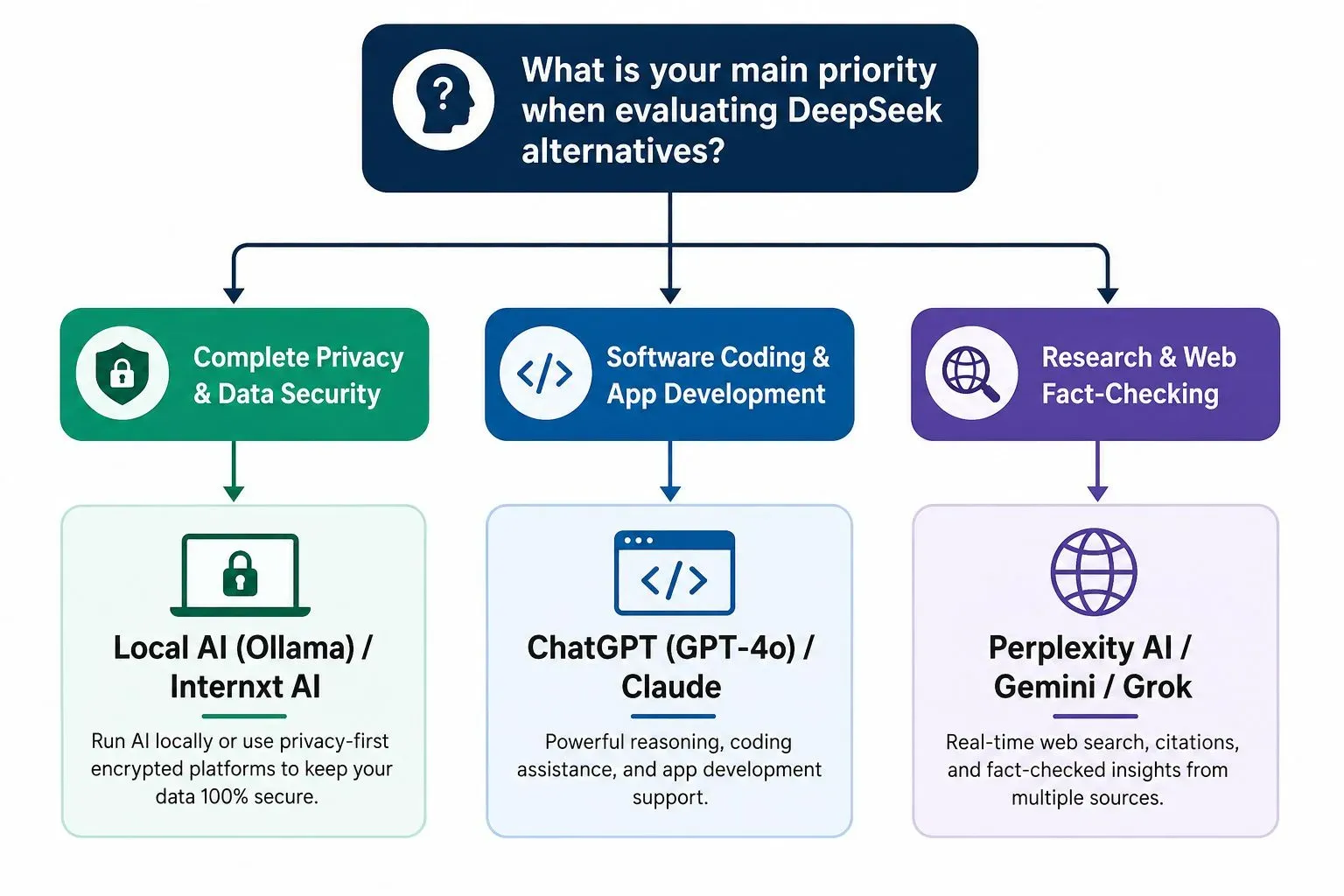
For Strict Data Privacy and Zero Data Retention: Choose Local AI (Ollama / LM Studio) or Internxt AI. Your prompts remain entirely offline or encrypted client-side under strict GDPR guidelines.
For Software Engineering and Coding Tasks: Choose ChatGPT or Claude. Both offer superior developer tooling, artifact previews, and reliable API uptime.
For Deep Research and Fact Verification: Choose Perplexity AI. Its automatic source citation engine eliminates manual link verification.
For Workspace Automation: Choose Google Gemini. Its ability to interact with your cloud documents saves hours of copy-pasting.

Leave a Comment
Your comment is completely private and secure. We never publish comments publicly on our website. Your message will be sent directly to our team.