


Today is 31 October 2026. There are only about two months left in 2026, and 2027 is almost here. If you are a freelancer, or you want to become one, this is the right time to stop and ask a hard question. Are you still waiting for clients to find you, or are you building a system that makes clients find you?
This guide is for the second kind of freelancer. It is not a list of tricks. It is a long game system, built on two things together: personal branding and freelancing platforms. Personal branding brings people to you. Freelancing platforms make the deal safe, give you a review, and build your profile. Together, they can take you from a single freelancer to your own agency or company, if you stay consistent.
Let us start with the truth, because the truth will save you months of frustration.
Why Getting Clients Feels So Hard in 2026
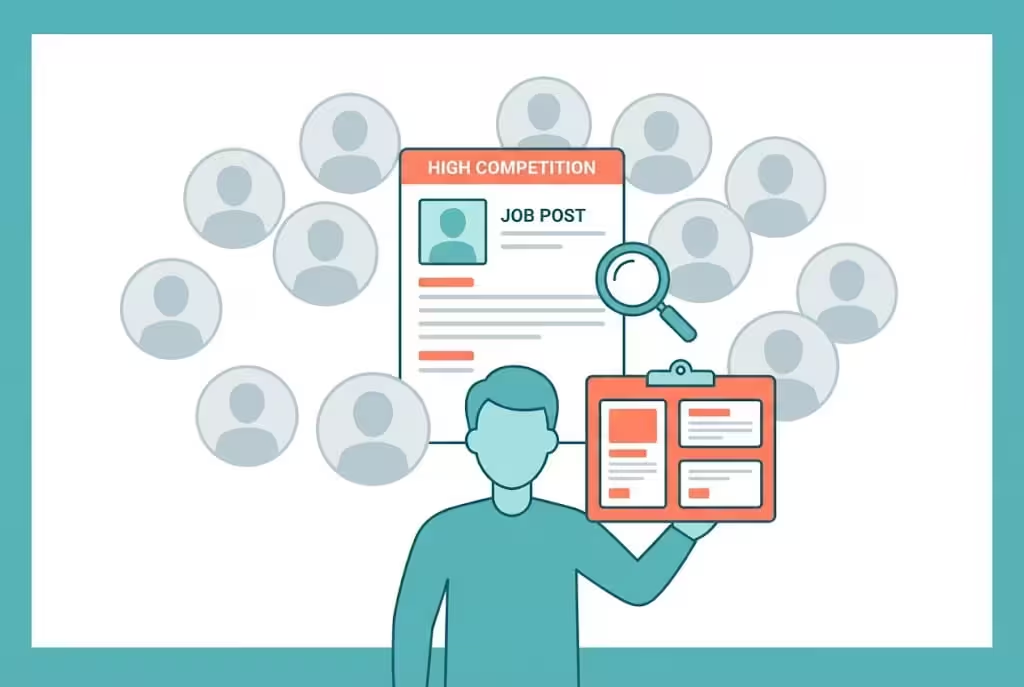
In 2026, computer science merit has increased, and many more students are learning the same skills. That is good for the industry, but it has a direct effect on freelancing platforms like Fiverr, Freelancer, and Upwork. More people are offering the same services, in the same categories, at lower prices. Competition is not a little higher. It is much higher.
That is why the old traditional way is failing for many new freelancers. The old way was simple: create a gig, wait for orders, and if no order comes, say you are unlucky. That is not your fault. Competition is so high that waiting alone is not a strategy anymore. A new gig, with no reviews, no portfolio, and no proof, is almost invisible among thousands of similar gigs.
Here is another trap. Yes, it is true that using some tricks, you can start getting orders. A trick can bring a quick order, but your future should not depend on tricks. If a trick breaks a platform rule, and your account gets banned, your whole business shuts off in one day. You lose your gigs, your reviews, your clients, and your income, all at once. That is not a business. That is a risk.
So this guide will not teach you tricks to game Fiverr, Freelancer, or Upwork. It will teach you a system that is slower at first, but safer and stronger in the long run. You build proof, you show your work, people start to trust you, and then clients contact you, instead of you begging for work.
The Right Approach for 2027: Personal Branding + Freelancing Platforms
Personal branding does not mean you have to become famous. It does not mean you have to dance on camera or post your whole life online. In simple words, personal branding means this: when people in your niche see your work again and again, they start to think of you as the expert in that niche.
Freelancing platforms do a different job. They do not make you famous. They make the deal safe. A client feels safe paying through a platform, because there is escrow, there are rules, and there is a review system. You feel safe too, because you deliver on the platform, you get a review, and your profile grows stronger with every completed order.
When you put these two together, something changes. This is the magic you need to understand:
In the old way, you contact people and ask them to give you work. You are chasing clients.
In the new way, people see your work, they trust you, and they contact you to take your service. You become the owner of your own work, not a beggar for orders.
That change does not happen in one day. It happens after people see your work many times. That is why this guide is a long game, not a one week trick.
Table 1: Old Way vs New Way
| Point | Old way, gig and wait | New way, personal branding plus platforms |
|---|---|---|
| Where clients come from | Only from the platform search | From social media, groups, portfolio site, and then closed on the platform |
| What client sees first | A new gig with no reviews | 10 projects, 20 to 50 posts, reviews, and a portfolio website |
| Who contacts whom | You contact clients and ask for work | Clients contact you after seeing your work |
| Trust | Low, because there is no proof | Higher, because there is public proof and platform protection |
| If account is banned | Business stops, because you had nothing outside the platform | You still have your brand, your audience, and your portfolio site |
| Future | Stuck as one freelancer waiting for orders | Path to agency or company, when work becomes too much for one person |
The Problems Freelancers Are Facing Today, Honestly
Before the steps, let us name the problems clearly, because many guides pretend these problems do not exist.
First, price race. When thousands of people offer the same service, many new freelancers lower their price again and again, just to get one order. That leads to burnout, because you work hard for very little money, and you cannot grow.
Second, no proof. Clients do not trust a profile with no work to show. They do not know if you can actually do the job, or if you are just copying someone else's gig description.
Third, AI pressure. AI tools can now do basic tasks faster. Clients expect faster delivery, but they still want human quality, human thinking, and human responsibility. A freelancer who only does basic, copy paste work will struggle. A freelancer who solves a real problem, with proof, will still be needed.
Fourth, fake clients and scams. Some people will ask for free work, or ask you to work outside the platform with no protection, or disappear after delivery. That is why closing on a platform matters, as you will see in Step 7.
Fifth, waiting and self blame. Many freelancers say, I am unlucky, or I am not good enough, when the real problem is the system. The system was: create a gig and wait. In high competition, that system alone is not enough. It is not your fault that competition is high. It is your job to change the system.
If any of these problems sound familiar, you are not alone, and you are not late. You are exactly the person this guide is for.
Step 1: Pick One Niche and One Service First
Do not start with ten services. Start with one niche and one clear service.
A niche is a small group of people with a similar problem. For example, do not say, I am a web developer for everyone. Say, I build fast websites for real estate agents, or I build online stores for small clothing brands, or I design social media posts for restaurants. The smaller and clearer your niche is at the start, the easier it is for people to remember you.
Ask yourself these three questions, and write the answers down:
- What skill do I already have, or can I learn well in the next 30 days?
- Who has a problem that this skill solves, and who can pay for that solution?
- What proof can I show in the next 30 days, even if I have no client yet?
If you cannot answer question 3, your niche is too broad. Make it smaller until you can show proof.
One niche also makes your content easier. Every post, every project, and every group discussion will be about the same problem, for the same people. After 20 to 50 posts, people will not say, this person does everything. They will say, this person is the expert in this niche. That is personal branding in its simplest form.
Step 2: Build 10 Portfolio Projects Before You Chase Clients
Now listen carefully, because this is the foundation of the whole system.
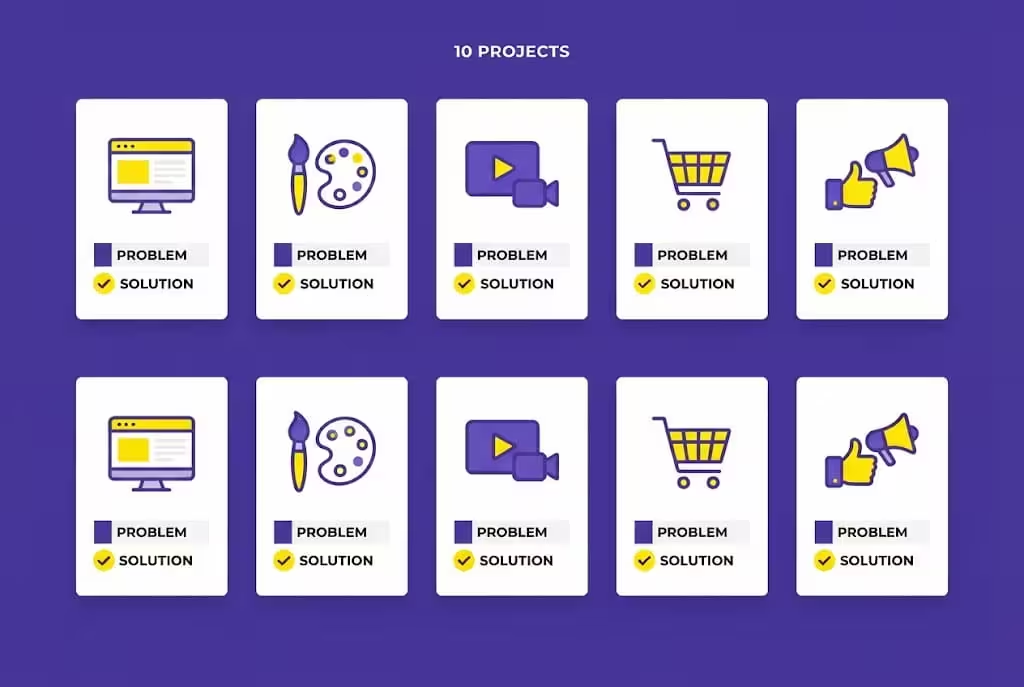
Work on your skills first. Make projects. Aim for 10 projects in your pocket as your portfolio. Ten is your target, but quality matters more than number. Five strong projects are better than ten weak projects. Ten strong projects are best, and that is why ten is the goal.
If you have no client yet, how do you make projects? You make practice projects for real problems. Do not wait for a client to give you permission to practise.
For example, if you are a web developer, build a website for a fake real estate agency, with property listings, a contact form, and a fast mobile design. If you are a graphic designer, redesign the social media posts of a local restaurant, as a practice project, and explain what you improved. If you are a video editor, edit a short promo video for a small business idea, with captions and clean cuts.
For each project, write it in case study form, not just a screenshot. A case study has four parts:
- Problem: What problem was this project solving? For example, a real estate agent had no website, so clients could not see properties online.
- What I built: What did you actually make? Be specific. Pages, features, design choices, tools used.
- Result: What changed? Faster loading, clearer design, easier contact, more professional look. Do not invent fake numbers. If it is a practice project, say it is a practice project, and show the result honestly.
- Tools: What tools did you use? This helps clients trust your skill, and it helps other freelancers learn from you.
When you share each project later, you will not just say, I made this. You will explain why you made it, and which problem it solves. That explanation is what turns a simple project into proof.
Step 3: Create Your Accounts, All With the Same Name
Now create your social media accounts. Use the same name, same profile photo, and same short bio on every platform, so people can recognise you everywhere. If your name is taken on one platform, use a small, clear variation, but keep it as close as possible.
Create these accounts:
- YouTube
- TikTok
- X, formerly Twitter
- Fiverr, Freelancer, or Upwork, depending on which freelancing platform you select
Do not try to master all platforms on day one. That is a common mistake. Create the accounts first, then focus your daily posting on two or three platforms, and reuse the same project on the others in a shorter form. The goal is consistency, not perfection on every platform.
Which freelancing platform should you select? It depends on your service, and you should pick one platform first, not all three at once.
Fiverr works well when you can package your service as a clear gig, with a fixed price and a clear delivery. A client finds your gig and orders it.
Upwork works well when you can write good proposals for posted jobs. You apply for jobs that fit your niche, and the client invites you or hires you.
Freelancer works in a similar way to Upwork, with bidding on projects, and contests in some categories.
Pick the platform where your niche clients are most active, set up your profile properly, and give it time. Later, when one platform is working, you can add a second. Spreading yourself thin on three platforms at once, with no reviews on any of them, helps no one.
Table 2: What Each Platform Is For
| Platform | Main job for you | Best content type |
|---|---|---|
| Community, groups, and Meta cross posting with Instagram | Project posts, group discussions, client results | |
| Visual proof and daily presence | Reels, carousels, project screenshots, before and after | |
| YouTube | Deep proof and trust | Project breakdowns, tutorials, how you solved a problem |
| TikTok | Fast discovery | Short project demos, 30 to 60 second tips, behind the work |
| X | Build in public and short ideas | Daily progress, short tips, project links |
| Professional clients and decision makers | Case studies, professional posts, client problems and solutions | |
| Fiverr, Freelancer, or Upwork | Safe closing, payment, and reviews | Your service page, portfolio, and completed orders |
Step 4: Make Your Own Portfolio Website, Your Home on the Internet
This is the main thing, and many freelancers skip it. Make a website for your portfolio.
Like this: if your name is John, then make john.com, john.me, or john.tech. A personal domain with your name is easy to remember, easy to share, and it looks professional. When a client sees your own website, with your projects deployed on it, it puts a very impressive impression on them. It says, this person is serious, this person has real work, and this person can be trusted.
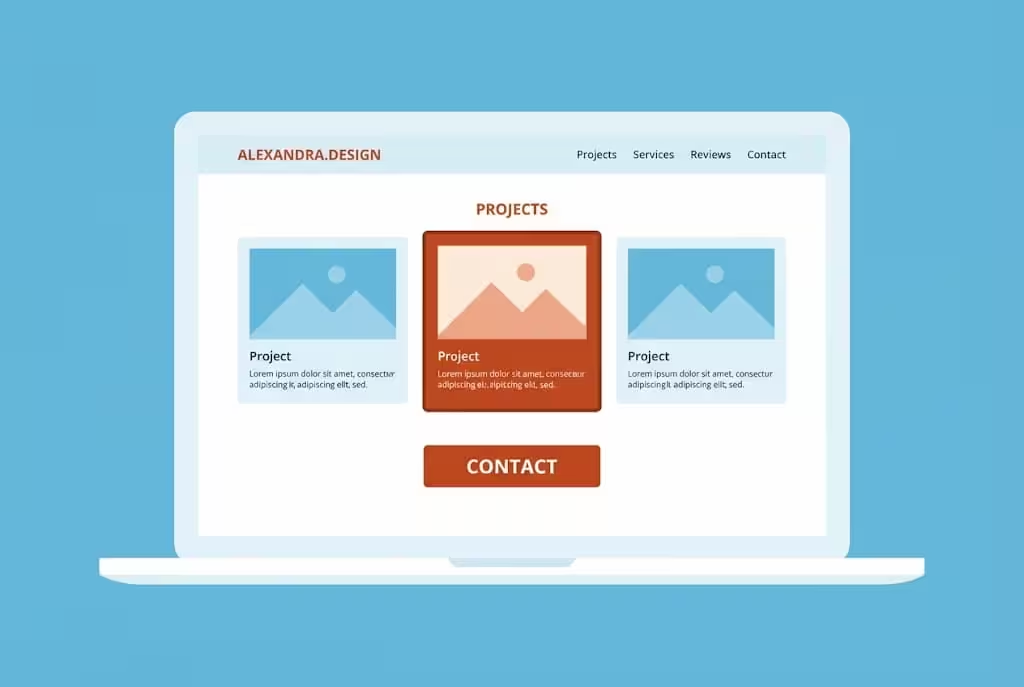
Your portfolio website does not need to be big. It needs to be clear. Put these pages or sections on it:
Table 3: Portfolio Website Structure
| Page or section | What to put on it |
|---|---|
| Home | Your name, your niche, your main service, and your three best projects |
| About | Who you are, what problem you solve, and why you chose this niche, in simple words |
| Services | Your services, what is included, what is not included, and starting price if you want to show it |
| Projects | All 10 projects, each as a case study, with problem, solution, result, and live link or screenshots |
| Reviews | Real client reviews, with permission, and screenshots of platform reviews when you have them |
| Contact | A contact form, your email, and a link to your freelancing platform profile |
Deploy your projects on your website. Do not just put screenshots. If you are a web developer, put live links. If you are a designer, put high quality images. If you are a video editor, embed your videos. Live proof is much stronger than a promise.
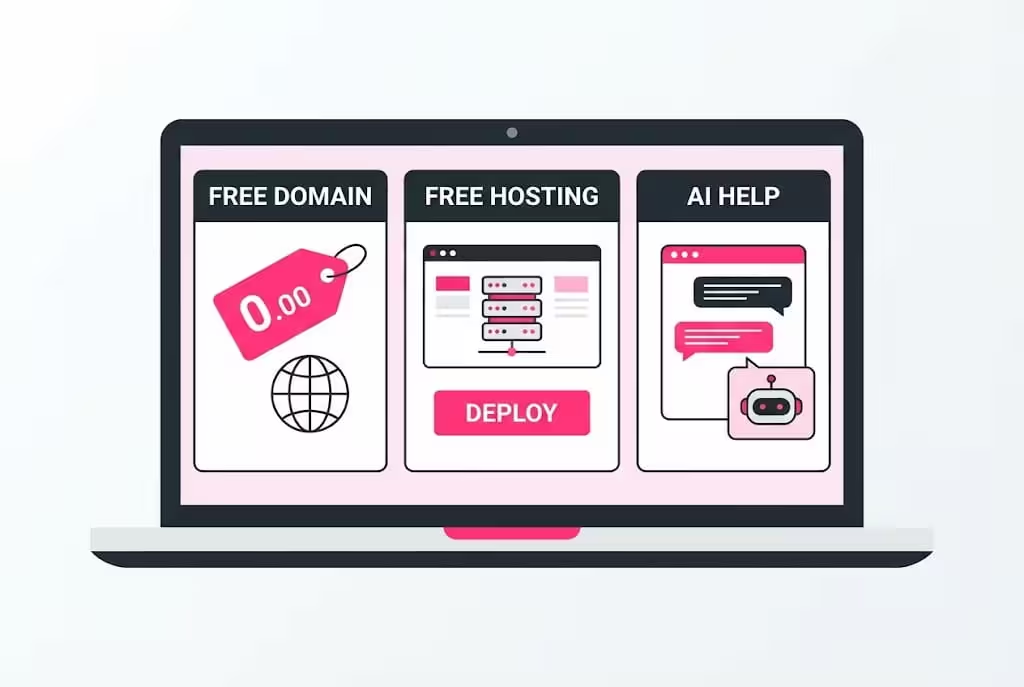
Free Domain and Free Hosting, Because Money Should Not Stop You
Now, you may be thinking, a website is paid. Do not worry. There are free routes to start, and this guide will give you the resources.
First, free domain. Check the Hacktoberfest promos page, at https://hacktoberfest.com/my/promos/ . Hacktoberfest is an annual event, and its promos page lists partner offers, including free domain and hosting offers in some years. Go to that page, sign in, and check which promos are available right now. Offers change, and stock can be limited, so do not assume one specific offer will always be there. Read the terms carefully, check the renewal price, and stop if the checkout total is not zero for a free offer. A free first year is useful, but you must know what it will cost to renew, so you are not surprised later.
You can also check the GitHub Student Pack, if you are a student, for student domain offers. That is another free route, with its own terms.
Second, free hosting. You do not need paid hosting to start a portfolio site. These free hosting platforms are commonly used for static portfolio websites:
- Vercel, good for fast, simple deployment of a static site
- Netlify, good for simple deployment with a free subdomain
- Cloudflare Pages, good for fast, free hosting with good performance
- Firebase Hosting, good if you already use Google tools
Pick one, deploy your portfolio, and connect your domain to it. The exact steps depend on the platform you choose, but the idea is the same: your code or your site files go to the free host, and your domain points to that host. Your portfolio is live, and you can share the link everywhere.
If You Are Not Technical, AI Can Help You Build the Website
If your services are non technical, and you do not know how to make a website, do not worry. It is the AI era now. You can make a website with AI, and you do not need to learn coding first.
Your question may be: which AI models make good websites? You are right to be concerned, because many good website builders are paid. Do not worry, there are free routes too, and here they are.
First, DeepSeek. DeepSeek is a very powerful free AI tool, and it can help you write website code, fix errors, and plan your pages. Go to DeepSeek, sign up, and ask it in simple words, for example: Make a simple portfolio website for a freelancer who builds websites for real estate agents, with Home, Projects, Services, and Contact sections, clean design, mobile friendly. Then test the code it gives you, change the text to your own name and projects, and deploy it on Vercel or Netlify. Do not copy blindly. Read the code, test every link, and make sure it works on your phone.
Second, Gemini Plus for students. Google gives a free student offer for Google AI Plus in some countries, through its student page. Here are the steps, in order:
- Go to https://gemini.google/students/ and read the offer carefully. Offers, countries, and end dates can change, so check the official page, not a random post.
- Sign in with your Google account.
- Complete student verification with your own student documents only. Do not use a friend or relative student card, and do not try to bypass age or location rules. If you are not eligible, do not fake it.
- You may need to add a payment method for verification, even for a free period. Read the auto renew terms carefully, and set a reminder in month 11, before the 12 month period ends, so you can decide to cancel or pay, with full knowledge.
- Use Gemini to plan your website, write your portfolio text, and improve your project descriptions. Then build the site with DeepSeek or another tool, and test it yourself.
AI can build the first version, but AI cannot build your reputation. You still need to check the website, fix mistakes, add your real projects, and keep it updated. That is your job, and that is what clients will judge.
Step 5: Share Every Project on Every Platform, With the Problem and the Solution
Now you have projects, accounts, and a portfolio website. Now comes the posting system.
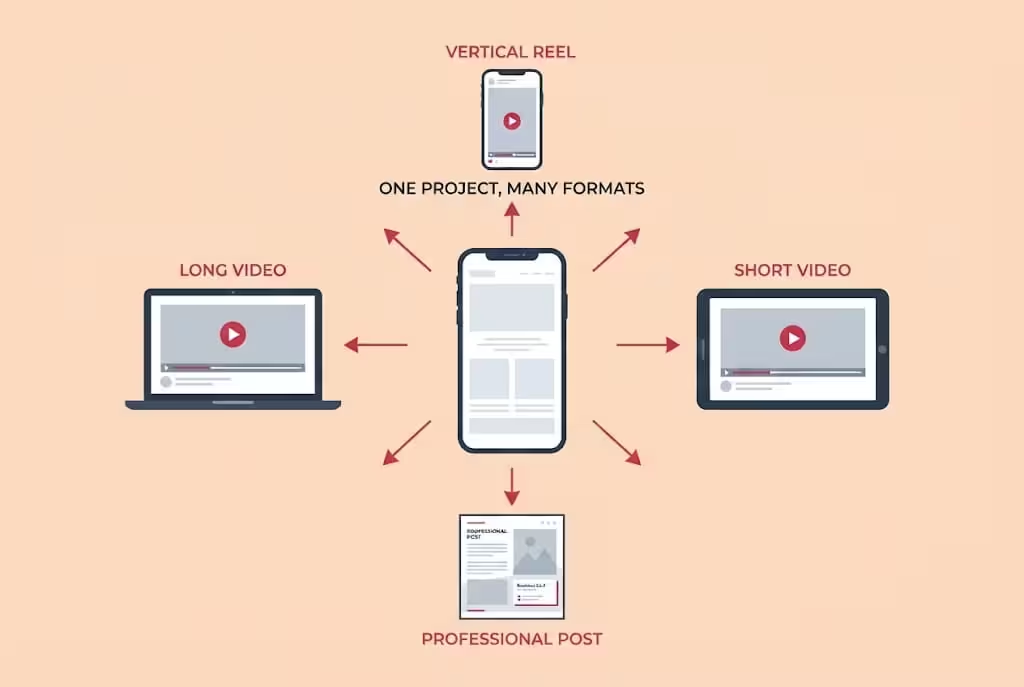
Share each project on every platform, but do not post the same copy blindly. Adapt the format. A TikTok video is not a LinkedIn post. A YouTube breakdown is not an Instagram reel. The project is the same, the format changes.
For each project post, use this simple formula:
- Hook, in the first line: the problem, in the client's words. For example, This real estate agent had no website, so buyers could not see properties online.
- Solution: what you built, in two or three lines. For example, I built a fast, mobile friendly website with property listings and a WhatsApp contact button.
- Result: what changed, honestly. Faster, clearer, easier to contact. No fake numbers.
- Proof: a screenshot, a short video, or a live link to your portfolio.
- Call to action, soft and clear: If you need a similar website for your business, send me a message, or check the link in my bio.
Now listen to what this will do. When you post almost 20 to 50 posts, people will start to notice you. They will not notice you after one post. They will notice you after seeing your work again and again, in the same niche, with the same quality. They will start to say, this person is an expert in this niche. They will start to contact you.
That is the shift. Where you used to contact people to give you work, now people contact you to take your service. That means you are the owner of your own work. You can choose your clients, you can set your price, and you can say no to bad projects.
A small correction to keep your expectations honest: 20 to 50 posts is a strong start, not a magic number. Posting alone does not guarantee clients. Posting consistently, in one niche, with real value, and with engagement, is what builds trust. Some people may contact you after 20 posts. For others, it may take 50 posts, or more. The system works, but it needs time. That is why this is a long game.
Your Daily Routine: Only 20 to 30 Minutes
Now listen to how you manage your accounts, because many freelancers quit here, thinking it takes all day. It does not.
Treat Instagram and Facebook as a single system, because if you post on Meta, it can be posted on both Facebook and Instagram. Use Meta cross posting or scheduling, so one post reaches both platforms. That saves you time every day.
Your daily routine can be 20 to 30 minutes, like this:
Table 4: Daily 20 to 30 Minute Routine
| Time | What to do |
|---|---|
| 5 minutes | Post one piece of content, a project post, a tip, or a result, on Instagram and Facebook together |
| 10 minutes | Reply to comments and messages, and comment helpfully in one or two client groups |
| 5 to 10 minutes | Repurpose the same project in a short form for TikTok, X, or LinkedIn, or plan tomorrow's post |
| 5 minutes | Update your portfolio or platform profile if you have a new project, review, or result |
That is it. You do not need to be online all day. You need to be consistent every day. One good post a day, for 30 days, is 30 posts. That is already inside the 20 to 50 post range, and that is how trust builds.
Step 6: Join Facebook Groups, But Play a Smart Move
Now listen to one more thing, because this is where many freelancers make a mistake.
Join Facebook groups, but do not join only service related groups. Service related groups are already full of people like you. Everyone there is offering the same service, and no one there is buying. Posting, I am a web developer, give me work, in a group full of web developers, will not bring you clients.
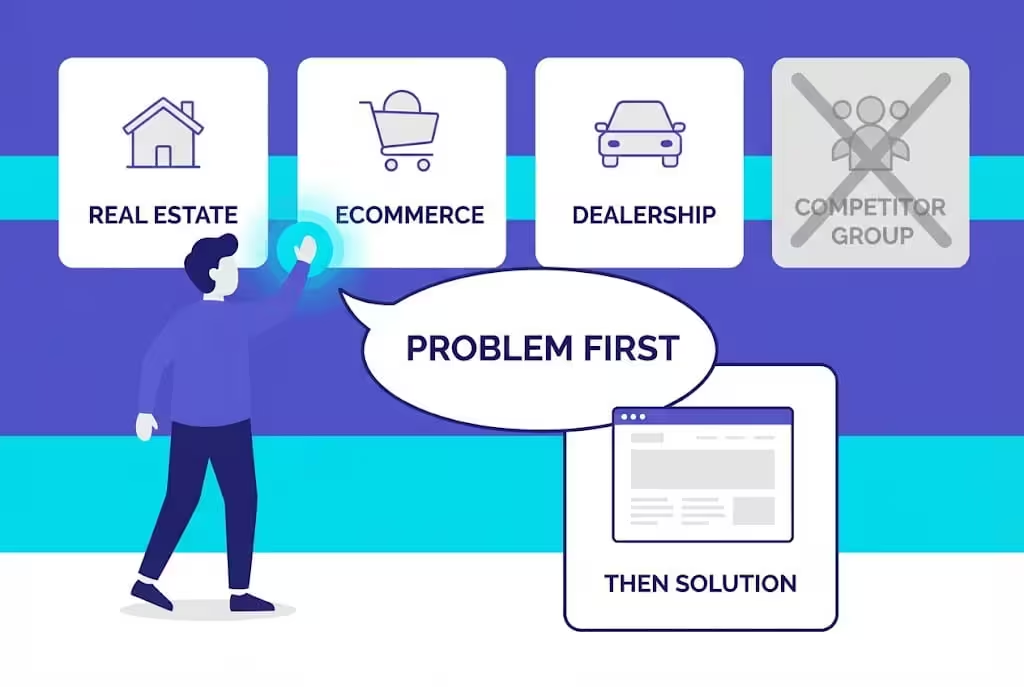
Here, play a smart move. Join the groups where your clients are.
For example, if you are a web developer, join real estate groups, ecommerce groups, and dealership groups. If you design for restaurants, join restaurant owner groups and local business groups. If you edit videos for coaches, join coaching and fitness groups. Go where the problem lives, not where the competition lives.
But do not post your service directly in those groups, like, I am a web developer, give me work. That is very unprofessional, and groups may ban you for self promotion. Group admins protect their members from spam, and they are right to do so.
Instead, do this: start discussing a problem first, then provide a solution, and show what your solution can do for them.
For example, in a real estate group, you could post: Many agents here post property photos, but buyers cannot see all properties in one place, and they message you again and again for details. A simple website with all listings, prices, and a contact button can save you that time, and it makes your agency look more professional. Here is an example of how it looks, with a screenshot of your practice project.
That is not begging. That is helping. You are discussing a real problem, you are giving a solution, and you are showing proof. People who have that problem will comment, ask questions, and contact you. That is how you get clients from groups, without spam, and without getting banned.
Rules for Facebook groups, to keep you safe:
- Read the group rules first, before you post anything.
- Give value for at least a few weeks, by answering questions and commenting helpfully, before you post your own work.
- Do not post the same post in 20 groups on the same day. That looks like spam, and Facebook may restrict you.
- Never share a client's private data, and never claim a practice project is a real client project. Honesty builds trust, and dishonesty breaks it fast.
- If an admin removes your post, accept it politely, and do not argue. Learn the rule, and post better next time.
Step 7: When a Deal Closes, Close It on the Freelancing Platform
Now listen to why I told you to create a freelancing platform account, even though you are building your brand outside the platform.
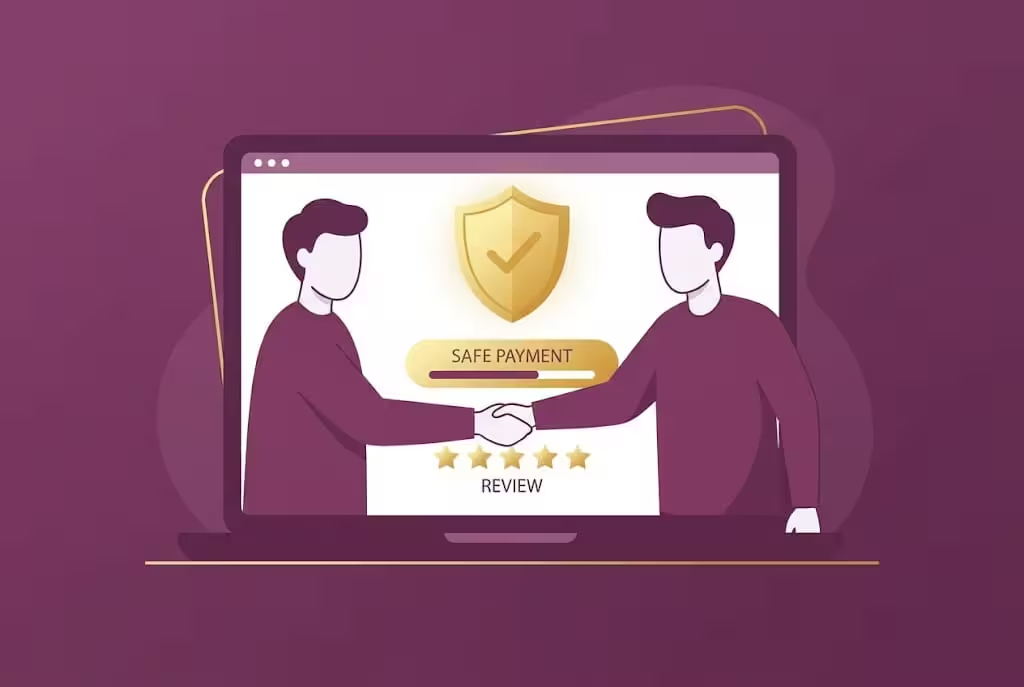
When your deal is closed with any person, through social media, through a group, or through your portfolio website, do this: ask them to pay you through that freelancing platform, and deliver the project on that platform.
For example, you can say, in polite words: Thank you for choosing me. For your safety and mine, I will create a custom offer on Fiverr, or a contract on Upwork, and we can complete the payment and delivery there. That way, your payment is protected, and you can leave a review after delivery.
This does two things at once.
First, the client feels safe. There is no trust issue, because the platform holds the payment, there are rules, and there is a record of the work. A new client, who has never met you, is much more likely to pay through a platform than to send money directly to a stranger.
Second, you get an order on the platform, and a positive review on it. That review boosts your freelancing profile. The next client who finds you on the platform will see real reviews, not an empty profile. Your brand brings the client, the platform keeps the proof, and the proof brings the next client. That is a circle that grows.
A few important corrections here, to keep you safe:
- Do not ask a client to pay outside the platform just to avoid platform fees, if that client first contacted you through the platform. That can break platform rules, and it can get your account banned. The fees are the price of safety, reviews, and dispute protection.
- Do not create fake orders or fake reviews. Platforms detect this, and a ban will destroy the profile you worked so hard to build.
- Always write the scope clearly on the platform: what you will deliver, in how many days, how many revisions, and what is not included. Clear scope prevents most disputes.
- Deliver on time, or communicate early if you need more time. Communication is often more important than speed.
Step 8: After Every Order, Share It, Get a Review, and Build Trust in Public
Now listen, because most freelancers stop too early. They deliver the project, they get paid, and they disappear. That wastes the most valuable part: the proof.
After completing each order, do these three things, in order:
- Ask for a review on the platform, politely, right after delivery. For example: Thank you for working with me. If you are happy with the work, a review on the platform would help me a lot. Do not force it, and do not offer anything in exchange for a positive review, because that breaks platform rules.
- Share the completed project on social media, with the client's permission. Share the result, not the client's private data. If the client does not want you to share, respect that, and share a general lesson instead, without naming the client.
- Invite interested people to your community, with their permission. For example, you can create a proper WhatsApp group or channel, in which you add only the people who agree to join, and in which you share your client reviews, completed projects, and useful tips.
Here is a correction that matters: do not add people to a WhatsApp group without their permission, just because they contacted you once. That feels like spam, and it breaks trust. Instead, ask: Would you like me to add you to my WhatsApp updates, where I share new projects and reviews? If they say yes, add them. If they say no, respect it. An opt in community is smaller at first, but it is much stronger, because everyone there actually wants to hear from you.
When you share reviews and completed projects regularly, with permission, it helps to make trust. New people see real clients, real work, and real results. They share your posts, they tell their friends, and slowly, it becomes a very big chain. You may not realise it at first, but one day, you will have more work than you can handle alone.
That is not a problem. That is the signal for the next step.
Step 9: From Single Freelancer to Agency or Company
When you become unable to handle the work alone, do not panic, and do not start refusing every client in a rush. That is the moment to convert from a single person to an agency or company.
Here is how to do it, step by step, without breaking your reputation:
- Standardise your process first. Write down how you take a project, how you communicate, how you deliver, and how you handle revisions. If only you know the process, no one else can help you.
- Hire for the repetitive work first. Your first hire should not be a clone of you. It should be someone who can do the tasks that take your time, but do not need your expert decisions. For example, a junior designer, an assistant for communication, or a second developer for simple pages.
- Keep quality control with you. Check every project before delivery, at least in the beginning. One bad delivery can damage the brand you built for months.
- Raise your prices slowly, as demand grows. When you have a waitlist, your price is too low. A higher price, with better service, is better than more work at a low price.
- Move from personal brand to company brand, slowly. Keep your name, but add a team page, a company name, and clear roles. Clients should still feel they are working with the person they trusted, but now with a team behind them.
Do not jump to an agency too early. If you have only two or three clients, you do not need an agency. You need more clients, more systems, and more proof. An agency is the result of too much good work, not a shortcut to get work.

Your 90 Day Plan for 2027
Do not try to do everything in one week. Follow this plan, and let the system work.
Table 5: 90 Day Plan
| Days | Focus | What to do |
|---|---|---|
| Days 1 to 30 | Skill and proof | Pick one niche, build your first 5 portfolio projects, create all accounts with the same name, build your portfolio website with free domain, free hosting, and AI help |
| Days 31 to 60 | Posting and groups | Finish 10 projects, post one project or tip every day, join 3 to 5 client groups, give value in groups, and set up your platform profile properly |
| Days 61 to 90 | Inbound and closing | Keep posting daily, answer inbound messages quickly, close every deal on the platform, ask for reviews, share completed work with permission, and invite interested people to your opt in WhatsApp community |
By day 90, you should have 10 projects, a portfolio website, 30 to 90 posts depending on your pace, a platform profile with real reviews, and a clear idea of which clients you serve best. That is a strong foundation, and it is much stronger than a single gig with no proof.
Mistakes That Kill This System
Avoid these mistakes, because they are common, and they are easy to avoid once you know them:
- Trying to serve everyone, instead of one niche. When you serve everyone, no one remembers you.
- Posting only, I am available for work, with no project, no problem, and no solution. Clients do not hire availability. They hire proof.
- Copying someone else's gig, portfolio, or posts. Clients can tell, and platforms can penalise copied content.
- Working for free forever, to get experience. One or two practice projects are fine. After that, charge something, even if it is small, because free work attracts clients who do not value your time.
- Taking payment outside the platform to avoid fees, when the client came from the platform. That risks a ban, and it is not worth it.
- Adding people to WhatsApp groups without permission, or sharing client work without permission. Trust, once broken, is hard to rebuild.
- Quitting after 10 posts, because no client came yet. The system is a long game. Ten posts is a start, not a finish line.
Motivation: You Are Not Late, You Are Early for 2027
Let me be honest with you, not as a guru, but as someone who knows how this feels. It is frustrating to work hard, learn a skill, create a gig, and hear nothing back. It is frustrating to see others getting orders, while you are waiting. It is easy to think, maybe I am not good enough, or maybe freelancing is not for me.
But listen: the competition is high, and the old way is weak. That does not mean you are weak. It means you need a better system. And you now have one.
You do not need to be perfect. You need to be consistent. One project, one post, one helpful comment in a group, one review at a time. That is how a brand is built. Not in one viral post, but in 20, 50, and 100 small proofs, stacked on top of each other.
2027 is almost here. Two months from now, you can either be in the same place, still waiting for a gig to get orders, or you can be 60 days into this system, with projects, posts, a portfolio website, and real proof. The choice is yours, and the time will pass anyway.
Start today, not tomorrow. Make your first project today. Post it today. Join one client group today. That one day of action is more valuable than one month of planning.
What To Do Today: Your 5 Step Checklist
- Write down your one niche and one service, in one sentence.
- Start your first portfolio project, for a real problem in that niche, even if it is a practice project.
- Create your accounts with the same name, on Facebook, Instagram, YouTube, TikTok, X, LinkedIn, and one freelancing platform.
- Check the Hacktoberfest promos page for free domain offers, and pick a free hosting platform for your portfolio site.
- Post your first project, with the problem, the solution, and the result, and share your portfolio link.
Do these five things today, and you have already started the long game.
Frequently Asked Questions
1. How to get freelance clients in 2027 without tricks?
Build proof first. Pick one niche, make 10 portfolio projects, share each project on social media with the problem and solution, build a portfolio website, and close deals on a freelancing platform for safety and reviews. That is the personal branding plus platforms system, and it does not depend on tricks or fake orders.
2. Is Fiverr, Freelancer, or Upwork better for beginners in 2027?
It depends on your service. Fiverr is good for a clear, packaged service with a fixed price. Upwork and Freelancer are good for applying to posted jobs in your niche. Pick one platform first, set up your profile well, and use your brand to bring clients to that platform for safe closing and reviews.
3. How many portfolio projects do I need before I get clients?
Aim for 10 projects, but do not wait for all 10 to start posting. Start posting after your first 2 or 3 strong projects, and keep building to 10. Quality matters more than number. Five strong case studies are better than ten weak screenshots.
4. How long does personal branding take to bring clients?
It is a long game. With one post a day, you can reach 20 to 50 posts in 20 to 50 days, but clients may come after that, not during the first week. A realistic expectation is 2 to 3 months of consistent posting, groups, and portfolio work before inbound clients become regular. Results vary by niche, skill, and consistency, and no one can guarantee a fixed number of clients.
5. Can I get a free domain and free hosting for my portfolio website?
Yes, for a start. Check https://hacktoberfest.com/my/promos/ for current free domain and hosting promos, and read the terms and renewal price carefully, because offers change. For hosting, Vercel, Netlify, Cloudflare Pages, and Firebase Hosting are commonly used free options for static portfolio sites. You may need to pay for renewal later, so plan for that.
6. How do I make a portfolio website if I am not technical?
Use AI tools. Use DeepSeek, a powerful free tool, to generate and fix website code, and use Gemini Plus for students, through https://gemini.google/students/, to plan your site and write your portfolio text, if you are eligible. Always test the website yourself, check every link on your phone, and add your real projects. AI can build the first version, but you are responsible for quality.
7. Should I join Facebook groups for my service, or for my clients?
Join client groups, not only service groups. If you are a web developer, join real estate, ecommerce, and dealership groups, where your clients are. Discuss a problem first, then share a solution, with proof. Do not post, give me work, and do not spam. Read group rules, give value first, and respect admins.
8. Why should I close a deal on a freelancing platform, if the client found me on social media?
Because the platform makes the deal safe for both sides. The client feels safe paying through escrow and platform rules, you get a recorded order, and you get a review that boosts your profile. That review helps the next client trust you. Do not take platform clients off the platform just to avoid fees, because that can break platform rules and risk a ban.
9. Can I add clients to a WhatsApp group after they contact me?
Only with their permission. Ask if they want to join your updates group or channel, where you share reviews and completed projects. Do not add people without permission, and do not share a client's private work without permission. An opt in community is smaller, but much stronger and more trusted.
10. When should I turn my freelancing into an agency?
When you regularly have more good work than you can handle alone, when deadlines start slipping, and when you have a clear, repeatable process. Standardise your process first, hire for repetitive work first, keep quality control with you, and raise prices slowly as demand grows. Do not start an agency before you have consistent clients and proof.
Final Words
Freelancing in 2027 will not reward the person who waits the longest. It will reward the person who shows the most proof, in one niche, consistently, and who makes it easy and safe for clients to hire them.
You already know the system now: personal branding plus freelancing platforms, 10 projects, one portfolio website, daily posting, smart groups, safe closing, reviews, and a community built on permission and trust. From there, the path to agency is not a dream. It is the natural next step, when your work becomes too much for one person.
Do not wait for 2027 to start. Start today, with one project, one post, and one honest step forward. Your future clients are not looking for tricks. They are looking for proof. Give them proof, and they will come to you.
Disclaimer: This guide is for education only. Freelancing platform rules, fees, and features change over time, so check the official Fiverr, Freelancer, and Upwork pages before you start. Free domain and hosting offers, including Hacktoberfest promos, change by year and availability, and renewal prices may apply, so read the terms carefully. Google AI Plus student offers also change by country and date, so check https://gemini.google/students/ for the current terms. Income is not guaranteed, and results depend on your skill, niche, consistency, and market. All figures in this guide are general guidance, not promises, and are shown before tax where relevant.
Share this article
Link copied to clipboard!