
Online Earning in Pakistan: 15 Real Ways to Earn from Home in 2026
Here's the uncomfortable truth most guides won't open with: scams are the first thing a Pakistani beginner meets — not opportunities — glittering Rs 50,000/day promises that all share the same red flags, from upfront fees to no-skill promises. I've watched sharp students burn their only phone data budget chasing those instead of building real income, and the difference between the two is boring: one sells you a dream without investment of effort, the other demands skill. With the cost of living squeezing every household, a second income matters — but only if you learn to avoid the noise first.
Everyone asks me for the fastest method; the smarter question is your Time to First Earning, because income here is an earnings ladder, not a lottery ticket. Start on the first rung — learn before earn, take one of the selling skills the local market actually buys, and keep upskilling while the money is small. I've seen this work for underemployed graduates and mothers with young children, or anyone facing mobility restrictions and family restrictions. What they all wanted was the same thing: a financial cushion earned on a flexible schedule. Raw digital literacy plus patience beats talent plus hype — every time.
Freelancing — Fiverr / Upwork / Freelancer.com
The truth about freelancing isn't glamorous: for newcomers, opportunities often begin with simple tasks—content writing, translation, customer service, virtual assistant—rather than mastering a skill. I witnessed a college sophomore start as a virtual assistant, then take on an Amazon virtual assistant project, and within a year transition into a copywriter and web designer salesperson. Most people see this as a skills issue; but my painful lesson is that sales skills are far more valuable than accumulating skills, and those who focus solely on skills without actively selling will ultimately remain unknown and struggling. What truly works is a streamlined and repeatable customer development system: write your platform profile like a promise rather than a resume, and write proposals based on personalized solutions rather than templates. Since there are no prior records, directly contacting clients is key to finding customers—first job opportunities often hide in Facebook groups where shop owners complain about slow responses; they might also appear in LinkedIn private messages, where a well-crafted LinkedIn personal brand shows potential clients that you understand their problems. Aside from internet access and a laptop, you need no investment, no upfront costs, and because there are genuine entry-level jobs available, it's one of the best work-from-home options for beginners. The real skill requirement is task-dependent: decent communication plus basic computer skills buys your ticket into online work; the rest you learn on paid time. Build a portfolio before you need one — two sample projects is enough — then promote portfolio pieces as a case study inside every pitch, and let your profile convert while the early ratings catch up.
On Earning Potential, I will be blunt: in the first quarter, most people in Pakistan land Rs 10,000–30,000 per month, and anyone promising more on day one is selling a course. Experienced freelancers cross that tenfold because employers rehire for results — reputation compounds, and scaling is just repeat buyers plus braver rates. The local vs international freelancing debate settled itself for me: local clients pay faster and argue less, international ones pay more and demand polish, so run both lanes and compare the best platforms instead of marrying one. Every quarter, upgrade one skill on purpose — I have seen students double their rates by adding a single service they first practiced on free sample work.
No posts yet in this category
Online Tutoring / Teaching
Forget learning brand-new skills — the money is in what you already know. If you're an FSc student wrestling with Biology, Chemistry, Physics and Math every night, your study subjects are a zero investment asset, and tutoring them to younger students is the best method I know for a Pakistani student to start earning. Parents in every corner of Pakistan are hunting for someone patient and affordable, and online tutoring — or the old-school walk-in method of teaching at the student's own home — turns your subject knowledge into a genuine income source. The math is simple: tutors typically charge Rs 10,000–20,000 a month per student for a few evening sessions, and those who hold onto consistent clients and referrals quietly climb toward Rs 50,000–200,000+ territory.
What makes this lane different is the near-zero scam risk — no buyers, no platform cuts, no algorithm to please, just you delivering results. It fits beautifully as work from home for women and homemakers who want a part-time rhythm with family support intact: two or three evening hours, no commute, no office politics. One edge I keep recommending from experience: mentoring MDCAT and ECAT aspirants, where desperate demand meets your ethical earning standards, and pairing it with light content creation — one chapter explained on video each week — so your name spreads without you begging for students. With inflation making a second income a necessity, this is an honest path: a steady side-hustle that can outpay a Rs 30,000/month starter salary and quietly builds real financial independence.
No posts yet in this category
E-commerce / Reselling / Dropshipping
I started backwards. Everyone told me to chase profitable month one, but my first 0–3 months were just messy product research and late-night chats with local shops trying to understand what actually sells. I learned advertising basics the cheap way, burning small budgets, and I built a tiny comparison table for myself to decide what to upload first. The contrarian lesson? Skip the hype catalogs. A handful of reliable suppliers beats a thousand random items every time.
When orders finally came, inventory handling nearly broke me — not the selling, the packing, the returns, the follow-ups. That's when I got serious about listing optimization and stopped copying everyone else. I studied Pakistani businesses that were doing things right, introduced more convenient payment options, including cash on delivery, and added a small referral program to reward repeat customers. What kept people coming back wasn't low prices, but a personalized customer experience: handwritten thank-you notes, quick responses, and honest delivery timelines. I don't have a prestigious education or an impressive background—just hands-on experience, trial and error, and a lot of patience.
No posts yet in this category
YouTube / Content Creation
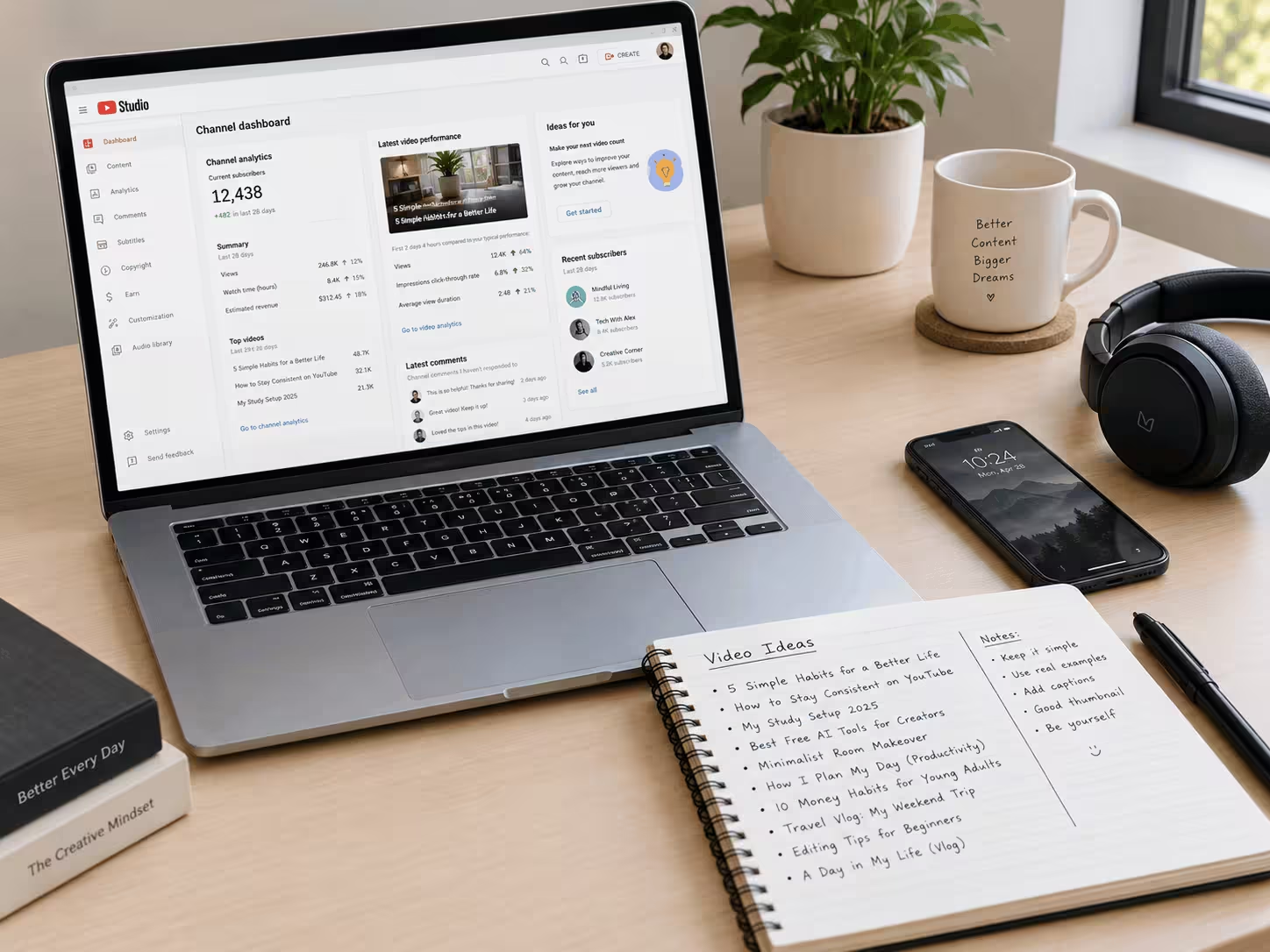
Everyone in Pakistan sells Pakistani students the same dream: start a YouTube channel and watch passive income roll in while you sleep. I have stared at enough analytics dashboards to know the uncomfortable version — our traffic sits on some of the lower CPC rates on the platform, so ads pay pocket change, and no payouts arrive before 1,000 subscribers and 4,000 watch hours, which takes most beginners 6–12 months of consistent uploads with zero income in between. There are no shortcuts, and anyone promising guaranteed returns from a new channel belongs to the same fraud file as the WhatsApp investment scheme community. Treat the channel as a learnable skill, not a lottery ticket: Pick one niche — health, lifestyle, home cooking, even baking — and create a content plan, thumbnails, and reading do.
Here is the angle nobody posts about: while your channel grows, video editing for other YouTubers pays this month. With 20M videos daily going up, editing is a genuine demand hotspot — local clients and international clients all need reels, promotional videos, and packaging, and 3 clients on steady work can beat $1,000/month long before your own channel monetizes. I learned video editing in a month or two of evening training, built a small portfolio, and landed early work opportunities thanks to my commitment to delivering projects on very tight deadlines. This reputation contributed to my success in everything I did afterward. I then focused on growing my income streams: affiliate marketing through referral links to earn a commission on the tools I already use, affiliate program income, brand promotion, influencer marketing deals as recurring income, and reposting short videos on TikTok and Instagram. When transferring funds, remember that PayPal is not supported here, so use Payoneer for dollar payments, or withdraw via Jazz Cash and EasyPaysa once you reach the minimum required amount. It is slower than the gurus claim, but it is built on real skills, not hype.
Blogging / AdSense / Affiliate Marketing
Forget app noise screenshots — my first website didn't do anything for four months, and that's perfectly normal. A blog is a long-term investment that requires 6–18 months of consistent uploads before it starts making money, whether from display advertisers or as a share of affiliate revenue. The people who actually make real dollar incomes have one thing in common: they choose narrow niches, learn SEO writing and keyword research instead of copying others, and treat WordPress and shared hosting as a business value game, not a game but. I learned the basics from free YouTube tutorials before I spent a single rupee — skill first, spend later.
Ad networks don't pay you the day the money shows up in the dashboard. Most of them sit on it until you hit a threshold, usually around $100, so your first payout might be a month out, or a quarter. When it does come, take the cheaper route: a local bank transfer or whatever payment option actually works where you are, straight into your own account. Every middleman takes a cut. Don't lean on search alone. One algorithm tweak and the traffic is gone. Give people something useful for free, and get an email address while you're at it. That's the audience you still have when Google changes its mind. And stay boring on the ethics. Copied content gets sites dinged or dropped. The "easy money" shortcuts you see pitched to beginners are usually just scams with better marketing. Whatever number someone posts online, treat it as pre-tax and imaginary until it actually lands in your account.

How to Earn from the News Niche in 2026: Website, AdSense and Social Media Step by Step
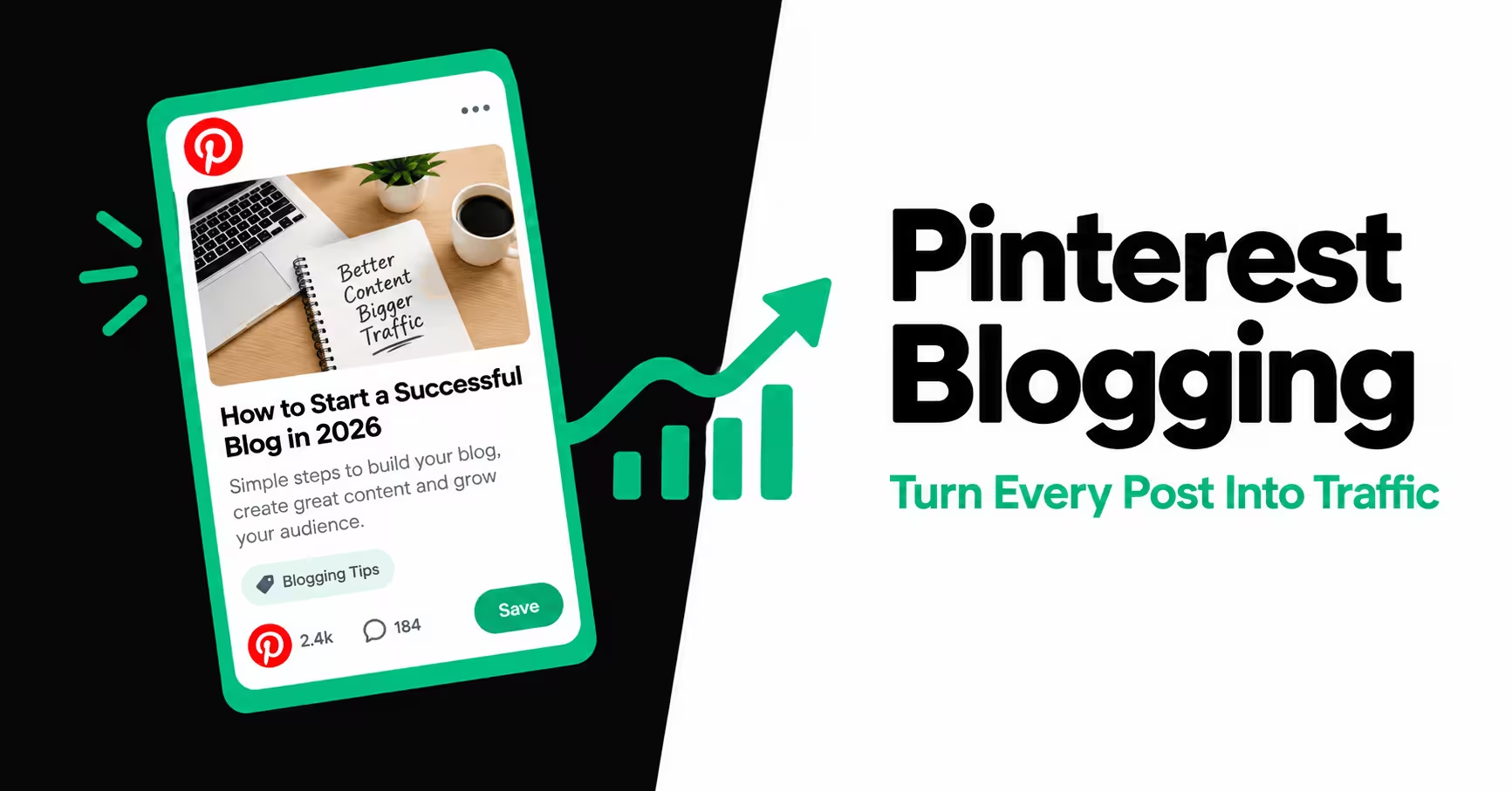
Pinterest Blogging: Turn Every Post Into Traffic (2026 Guide)
How a Tool Website Earns Money With Google AdSense in 2026: From Keyword Research to First Payment
Digital Marketing / Social Media Management
Here's the uncomfortable truth about digital marketing in Pakistan's digital economy: clients don't pay for your certificates — they pay for meeting client expectations, and your testimonials are the receipts. I've watched students with nothing but internet access, a phone, and decent content writing win gig-based work from local shops while diploma-holders were still "learning" — because they treated their first small page as a living social media portfolio and let the reviews do the talking. The loop is brutal and simple: land one client, earn one 5-star reviews rating, and that single screenshot wins you the next two.
In practice, social media management for small businesses is one bundled package: captions with sharp copywriting, clean graphic design (even just logos and basic layouts at first), posts built with working SEO skills — and with AI tools access, anyone can draft a week of content in an evening. The soft part tries everything from drafting simple contracts, pricing with competitive pricing logic instead of panic, and treating each account as a referral machine—high-value customers come through referrals, not sales via. Give it 1–3 months of pitching to clients, building your personal brand on social, maintain a strictly professional profile, and those first long-term projects will start to find you.
No posts yet in this category
Microtasks / Simple Online Tasks
Most guides treat simple tasks as a joke, but I'll be honest: they were my first rupee online. The platforms hosting these tasks — survey apps, ad-clicking panels, and data-labeling queues where you train AI models by tagging images — actually pay, just very little. I spent a couple of evenings just clicking through surveys—nothing fancy, just figuring out how online work actually works—before I had anything real to sell. That low-pressure practice taught me way more about what clients actually expect than any motivational video ever did.
The honest filter is this: legitimate earning apps never ask you for money upfront, and the moment one does, you're looking at a scam, not a job. App-clicking and referral apps can stack a few hundred rupees in a good week, so treat them as a stepping stone — pocket money while you learn a real skill — not a career. Anyone promising full-time income from microtasks is selling you the dream, not the math.
No posts yet in this category
Graphic Design / Video Editing
Here is the part nobody tells beginners: clients on freelancing websites do not pay for the software on your laptop, they pay for what happens after you deliver. When I cut my first few videos for a small clothing channel on YouTube, nobody asked which editor I used — the only question was whether views went up. That is the uncomfortable truth about design work: business accounts on Facebook buy brand growth, not certificates. A student who can ship clean landing pages, scroll-stopping creatives for paid ads, and full social media management design packs can walk out of the 9-to-5 grind mindset fast — one or two steady clients can outpay an entry-level salary.
The barrier is lower, as it seems, because of that. Coursera and freeCodeCamp both provide free tracks that take you from complete beginner to the level of skilled people without spending a single rupee, and the real benefit comes later: raise the level of your voice until you improve your tools. On Fiverr and Upwork, a strong gig is designed truly earlier and later with examples; thoughtful gig optimization arises every time. Those samples are what quietly build toward financial freedom — not overnight, but client by client — because SMM pages, startups, and local brands are all hunting for the same thing: someone reliable who makes their feed look expensive.
No posts yet in this category
Scams & Challenges to Avoid
Every few months a fresh wave of course promos lands in student WhatsApp groups, usually selling a $1,000 guarantee or a Rs 35,000 "mentorship" that turns out to be filler — pre-recorded videos anyone could find free. I've watched classmates burn their savings on these, then end up unemployed again, no closer to real internet work. Worse are the account-rental and lead-gen traps, where strangers ask you to hand over your marketplace profiles; the result is predictable — banned freelancers with dead accounts and a stained identity they can never reuse. Back in the early 2000s you could blame scarce jobs; today the jobs exist, but the Skill Barrier decides who gets them, and scammers sell shortcuts past it because hope is easier to monetize than skill.
Then there is the quieter trap: microtasks and surveys that pay $1–5/day, often in gift cards, with a wallet withdrawal locked behind a $1 payout threshold you never quite reach. Add the data entry grind at low pay and you have a perfect stopgap that feels productive for 6 months while your real skills stall — meanwhile unexpected expenses eat whatever trickled in. My honest advice after years in this space: treat these as exposure, not income, lean on support networks of real freelancers, guard your peace, and remember your relationships matter more than any contributor badge on a gig site — the algorithm forgets you, people don't.
How You Get Paid in Pakistan
The part nobody warns you about is the withdrawal, not the work. I've watched students land their first orders and then discover that getting the money out takes 2–4 weeks of clearing, thresholds, and paperwork — and if you're under eighteen, even sign up for most wallets means borrowing your parents' CNIC and bank details. That's why negotiation has to happen before the work starts: agree on milestones, ask for a small advance, and track every rupee in Google Sheets so a late payment never turns into an argument. Retainers change the game here — one fixed client paying Rs 5,000–20,000/month beats chasing five one-off $5 gigs, because the money becomes predictable instead of a lottery.
On the selling side, cash-on-delivery is still the payment method Pakistan trusts — a customer confirms on WhatsApp, the rider collects on delivery, and your markup only becomes real money after returns and courier cuts. Smart sellers send a proper purchase link for advance transfers on big orders and pay their suppliers from the same cycle, keeping the whole loop zero investment. Ad dollars are slower: It takes 1,000 subscribers and 4,000 watch hours before one ad impression converts CPC pay-per-view value into clicks. Even then, those transfers land after weeks of verification. And the ugliest lesson — edited payment screenshots are the most common cyber scams in this space, which is why experienced freelancers trust bank-credited workarounds over any "instant transfer" promise.
Skills-First / Learn-Before-You-Earn
Everyone wants to get rich in life, but almost no one wants to spend 1 year to get really good at something first — and this lack of perseverance is exactly why students never earn more than a rupee on the internet. I learned this the hard way: I stopped pursuing payments and chose one path, programming with React, then MERN, then Laravel, and I pursued actual subject matter expertise instead of certification and knowledge. The same rule applies whether your path is data analytics, advanced Excel, or digital marketing — the right skills are the only crutch for beginners. And forget stacking paid courses you'll never finish; every student I know who actually made it learned from free material and built in public.
My own approach was intentionally unsexy: just a simple 7-step process I stuck to. Pick one skill. Study it every day. Build something in demo mode. Join a small private community. Get real feedback. Package the proof of what I can do. Then sell it. Fixing my client communication with English-with-AI practice and treating resume building as a weekly habit did more for me than any shortcut, and a mentor's job support pulled me through the dip when progress felt invisible. Even unglamorous reps — typing accuracy drills, writing product descriptions for imaginary brands, small AI training tasks — compounded into hireable skill. Learn first, earn second; the order is the whole game.
Frequently Asked Questions
How can a student in Pakistan earn money online without investment?
In Pakistan, students can earn money online by selling their existing skills or skills learned for free, without any investment: for example, offering freelance services such as writing, graphic design, and video editing on mainstream platforms; tutoring younger students online; creating profitable YouTube channels or TikTok accounts; providing data entry and virtual assistant services for small businesses; or joining any commission-based program that allows them to hold any stake. I've seen students receive their first small order within a month using only a laptop and a mobile hotspot, because their only real investment was the time spent learning and selling. Frankly, the secret is: choose a field, learn using free tutorials for 3 to 4 weeks, and then sell to five clients every day. Trying five methods simultaneously often results in most students getting nowhere.
How much can a Pakistani student realistically earn per month?
The realistic income for a Pakistani student working part-time, from two to four hours a day, ranges between 15,000 and 60,000 Pakistani rupees per month (before taxes) during the first six months, while the income of experienced freelancers and creators exceeds 100,000 to 200,000 Pakistani rupees per month (before taxes) once they obtain positive ratings and permanent clients. Small tasks and surveys are among the lowest-paying types of work, with earnings ranging from one to five dollars per day, whereas jobs that require high skills—such as video editing, content writing, and teaching—generate a much higher hourly income. According to my observation, students whose income exceeds 50,000 Pakistani rupees per month are not necessarily the smartest; rather, they are the ones who kept submitting proposals after the first twenty were ignored. Income grows with skill and reputation, not with the number of hours worked, so do not measure success by the first week.
Which platforms are best for students with no investment?
For students who don't need to invest, the best platforms include large freelance platforms (completely free to join, with fees only incurred after earning income), video platforms (earning money through advertising and brand partnerships after reaching a monetization threshold), tutoring platforms (allowing for home-based instruction), and affiliate networks (earning commissions through product referrals). I always advise beginners to start where their clients congregate: designers should showcase their work on social media, writers should post their work on freelance websites, and tutors should teach through tutoring platforms or even WhatsApp groups. Never join any platform that asks for a joining fee or activation fee. This is the first major sign you're about to fall into a scam, and in my experience, legitimate money-making platforms never charge any fees.
Is there a skill requirement for online work?
While there are no fixed skill requirements, your skill level determines your earning potential. You can start from scratch with micro-tasks, basic data entry, or simple virtual assistant jobs, as these only require basic English typing skills and a mobile phone, but the pay is also the lowest. In my experience, even mastering just one basic skill, such as Canva design, short video editing, or fluent English writing, can double or even triple your hourly wage within a few weeks. The good news is that there are free tutorials available online for these skills, and with consistent daily practice for three to six weeks, you can reach a job-ready level. So, you don't need a certification first, but you must learn something, because competition for beginners is fierce, and the pay will only decrease over time.
How do I find clients?
Honestly, the best way to land clients as a student is to just hang out where they already are. Get a good portfolio up on freelance sites, but don't stop there. Keep an eye on Facebook groups and LinkedIn—when a business owner posts that they need a hand, jump into the conversation. You can even walk right into local shops and offer to take their social media off their plate. And whenever you do a great job for someone, don't be shy about asking them to pass your name along. In my experience the first client almost never comes from sitting around waiting for orders. It comes from you reaching out. Send ten tailored proposals a day and you'll usually hear back from someone within a couple of weeks. Treat those first three jobs like an audition—charge a little less, deliver a lot more, and get the reviews. Reviews are what turn cold pitches into people coming to you. One honest piece of advice: never pay anyone who promises to get you clients for a fee. Real clients come from good work that people can see and from consistent outreach.
Is online tutoring a good income source for Pakistani students?
Online tutoring is one of the best sources of income for Pakistani students, especially FSC (pre-university) and university students, who can teach high school and O-level (General Certificate of Secondary Education) courses. Tutors typically charge 500 to 1500 rupees per hour (before tax), and students only need to teach for two hours a day to easily earn 25,000 to 50,000 rupees per month (before tax). I have personally witnessed students build up their entire income stream with just a few regular students, without paying platform fees or bidding, simply through WhatsApp groups and word-of-mouth referrals from parents. Since FSC students have a good grasp of high school material, tutors can start by teaching what they have just learned, offering free trial lessons, and letting students' learning outcomes lead to recommendations. This also helps solidify knowledge; therefore, online tutoring is the only way to earn money that truly helps improve grades rather than drag them down.
Can Pakistani students earn from YouTube?
Yes, Pakistani students can definitely make money on YouTube. You can start earning from YouTube once you have 1,000 subscribers and 4,000 hours of watch time. After that, revenue starts coming in from ads, brand deals and affiliate links. That said, don't expect overnight success. Most new channels take around 6 to 12 months before they actually start earning anything decent. And in the beginning, the ad revenue (before tax) is usually pretty small. However, education and technology channels in Pakistan are thriving because competition for Urdu and Romanized Urdu content is still less than for English content. From my observation, students who make YouTube a daily habit and consistently upload videos for a year are more likely to succeed. Those who only upload ten videos and then give up earn nothing. Treat YouTube as a long-term asset, not pocket money: combine it with other faster revenue streams and keep a record of your earnings, as creators' income is taxable.
Which method is best for FSc students specifically?
For FSC students, the best part-time jobs are those that balance university and college coursework: for example, providing online tutoring for high school graduates, editing short videos for content creators, and writing content—all of which can be done in two to three hours in the evening without affecting grades. I've found that tutoring is the best option for FSC students because it's lucrative and allows them to focus on studying; while video editing is perfect for students already accustomed to social media. Frankly, the FSC stage isn't suitable for pursuing high-intensity jobs or starting a full-fledged channel. Your exam scores determine which university you get into, and no amount of online income can replace a stable income stream. Choose a less demanding part-time job, keeping it under 15 hours per week during exam periods, and gradually increasing the workload after exams.
Are online earning apps in Pakistan legitimate?
Most online money-making apps in Pakistan claim you can earn daily income by watching videos, clicking ads, or referring friends. Most of these apps are actually illegal, and even those that pay offer very little money. Some make it almost impossible to withdraw your earnings, while others ask you to pay a hefty fee upfront. In my experience, any app that requires you to invest first is a red flag, and referral apps that only pay out to others are essentially pyramid schemes in disguise. There are some legitimate exceptions, but the returns are minimal: genuine surveys and micro-task apps pay small but real rewards, and bank or wallet cashback programs, while real, offer negligible amounts. My advice is to treat these apps only as small tools for earning pocket money and never invest any real capital. If you really want to make money seriously, learn a skill instead of collecting a bunch of apps.